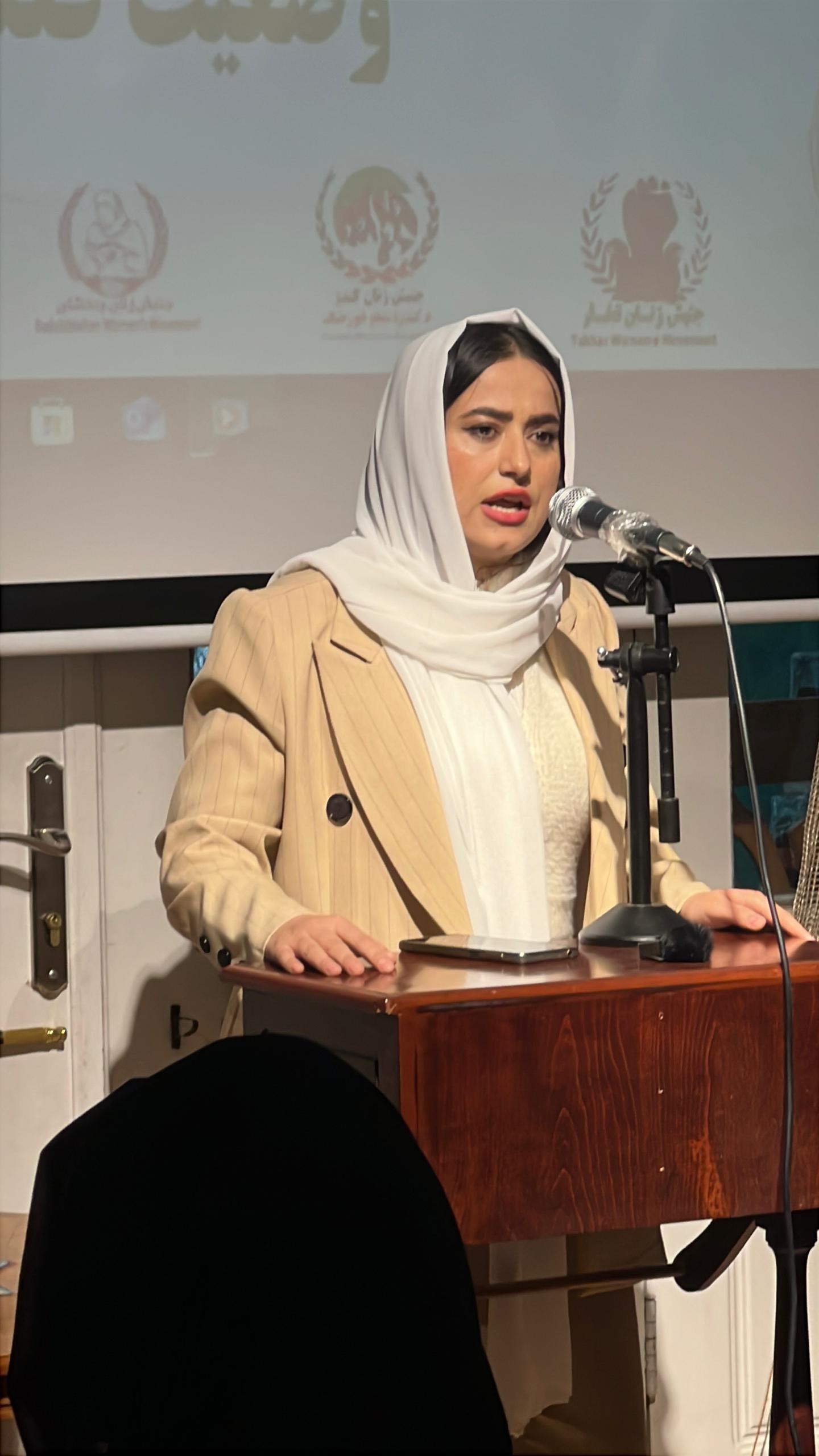
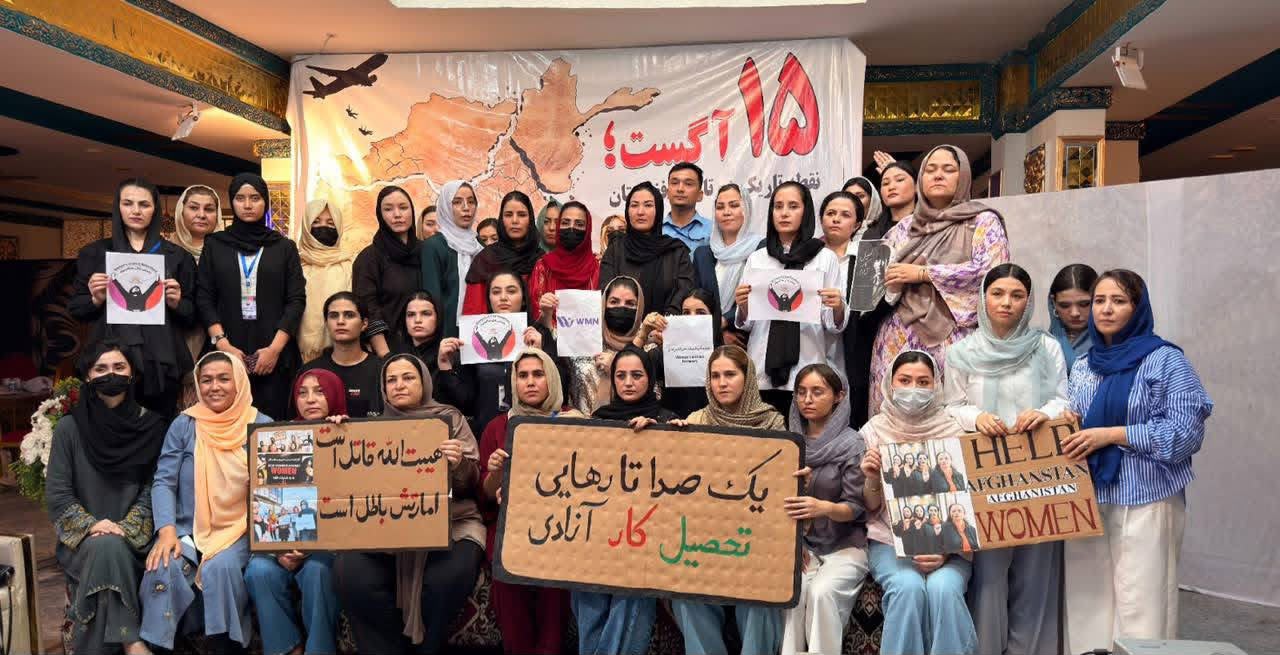
Five years after the Taliban seized control of Afghanistan, a joint protest program was held in Pakistan on August 15, 2026, bringing together representatives of protest movements, civil society activists, human rights defenders, members of the LGBTQ+ community, former military personnel, media representatives and advocates of freedom.
The event was organized at the initiative and with the support of the Women’s Justice Movement, and focused on the situation of women and girls, the suppression of people in Afghanistan and the consequences of five years of Taliban rule.
Women’s Movements Use Art and Protest to Keep Their Voices Heard
The program was hosted by Zahra Mosavi, who opened the event before representatives and guests from protest movements and the former military addressed the gathering.
Speakers included Shahla Arefi, Ada Barez, Samima Amiri, Noormarjan, Fatema Bakhtiari, Darya Neshat, Munir Ahmad Sadiqyar, Latifa Shojaei, Somaya Amani and Sahar Nikzad. They spoke about the situation of women, the suppression of people and the consequences of five years of Taliban rule.
The artistic section of the program highlighted both the Taliban takeover and the continued struggle of women. Members of the Women’s Justice Movement performed a theater piece about the occupation of Afghanistan and women’s resistance.
Batool Hashemi presented a reading of “School Letter,” while Shafiqa Honardost, a member of the Window of Hope Movement, performed live music. Mubarakah, an engineer and member of the Roshan-e Omid Movement, also recited the poem “Homeland.”
Protest Exhibition Reflects Displacement, Banned Education and Loss
At the entrance to the hall, the Women’s Justice Movement had organized a protest exhibition featuring symbols of migration, repression and the restrictions imposed on people in Afghanistan.
A suitcase represented migration and displacement. Clothes, a bag and shoes were displayed alongside a schoolbook chained shut, symbolizing the ban imposed on girls’ education and schooling in Afghanistan.
The exhibition also featured candles and scattered flowers, paintings depicting women facing repression, and an image of Morteza Karimi, a young man who was killed by the Taliban during protests in Herat.
Another section of the exhibition featured a display card titled “For Afghanistan.” Participants were invited to write their personal messages and thoughts for Afghanistan and record them with their signatures.
At the conclusion of the program, Zahra Mosavi launched a “Free Mic” session under the title “We Will Not Forget…” The section provided an opportunity for people who had not been able to speak during the formal part of the program to share their personal messages, views and concerns with others.
Participants then raised slogans including “Hibatullah is a killer; his Emirate is illegitimate,” “Education, Work, Freedom,” and “Stop Gender Apartheid.” Through these slogans, participants reaffirmed their determination to continue the struggle for freedom, justice and the rights of women and girls in Afghanistan.
The program also launched the “Help the Women of Afghanistan” campaign, calling for support for women in Afghanistan and emphasizing the importance of bringing their voices to the international community.
Women’s Movements Call for Continued Resistance and Global Support
The program was supported by the Women’s Justice Movement.
The event was organized by the Women’s Justice Movement, Women’s Movement Network, Lantern of Freedom Movement of Women of Afghanistan, Window of Hope Women’s Movement, Women’s Path to Freedom Movement of Afghanistan, Roshan-e Omid Social Organization, Afghanistan Freedom Forum, and the Women’s Movement of Afghanistan for Equality.
The gathering brought together different sections of civil society and women-led protest movements in a collective expression of opposition to Taliban rule. Through speeches, artistic performances, symbolic displays and public messages, participants called attention to the restrictions and repression of the past five years and reaffirmed their demands for education, work, freedom, equality and justice.
Share: