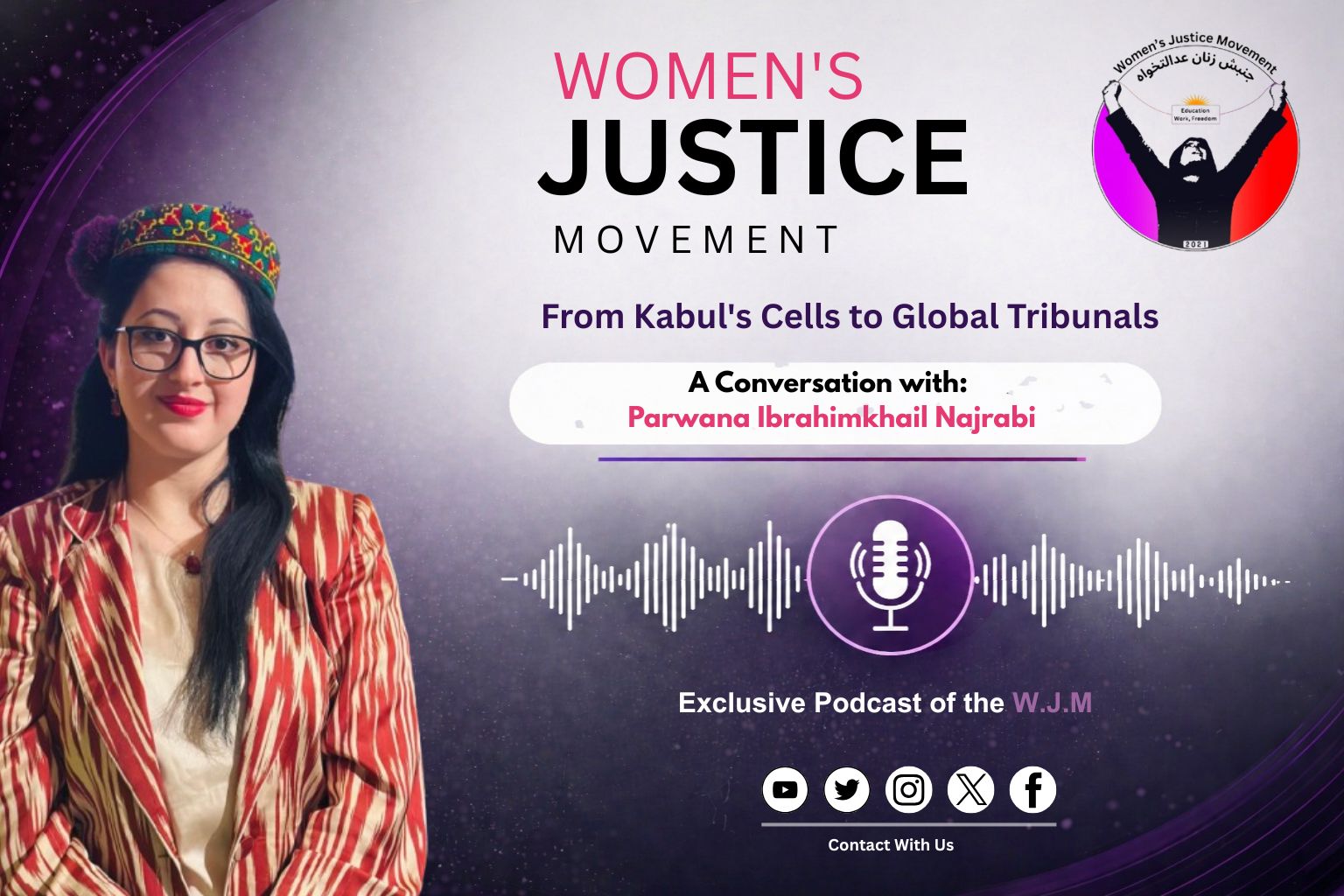
"I felt only my body was in exile, while my soul remained in the streets of Kabul." These are the words of Parwana Ibrahimkhel Najrabi, a symbol of defiance in the face of absolute repression. As a prominent women's rights defender, Parwana’s journey took her from the protest-filled streets of Kabul to the harrowing darkness of Taliban interrogation cells. Having survived torture and arbitrary detention, she refused to let the walls of a prison silence her mission.
Now, as a powerful voice for Afghan women on the global stage from the UN to the European Parliament she continues to challenge the world's indifference to "Gender Apartheid." In this exclusive and deeply personal interview, Parwana recounts her brutal encounter with captivity, the psychological scars of torture, and her unwavering vision for a justice-oriented Afghanistan where no woman is forced into silence.
women Justice Movement: Dear Ms. Parwana Ibrahimkhel Najrabi, first, please introduce yourself in detail to the audience of our movement.
Parwana Ibrahimkhel Najrabi: I am Parwana Ibrahimkhel Najrabi, born in 2000 in Kabul. I was born into a relatively large family and completed my education, specifically school, in Kabul. While I was a student, I began my civil activities and was part of Afghanistan’s civil society. At that time, I advocated for women’s issues, particularly regarding menstruation, which was considered a taboo and a source of shame in many places. I organized campaigns for women to help them understand that menstruation is a natural biological process—nothing to be feared. These campaigns taught women how to maintain hygiene and cope with the physical challenges associated with it.
I held a specific campaign in Kapisa province, as I am originally from there. I was also active in journalism, working on issues concerning youth and the presence of women in peace and social spheres. I organized programs to support women, such as celebrating March 8th and honoring the sacrifices of the Afghan security forces. I was carrying out these activities before the Taliban took power, while simultaneously studying journalism at a private university in Kabul. However, with the arrival of the Taliban, my education remained unfinished.
women Justice Movement: What first drove you to fight for women's rights in Afghanistan?
Parwana Ibrahimkhel Najrabi: Every journey begins with a reason. For me, it was the rampant injustice in society. Seeing the harassment of women, even within their own families, made me feel that I had to act. I focused on raising awareness among women about their rights and showing them how to make decisions for their own lives. Ultimately, it was the pain and suffering of women caused by discrimination—and its severe impact on their mental well-being—that drove me to become an activist and be their voice.
women Justice Movement: How did your family react when they learned you intended to join the protests against the Taliban's restrictions?
Parwana Ibrahimkhel Najrabi: It was incredibly difficult for my family to accept my participation in the protests. We were standing against a group whose language is weapons, terror, and fear. It was hard to convince them because they had all experienced the Taliban's atrocities: I lost my father to the Taliban, and my brother was blinded in a Taliban suicide attack. Despite their initial opposition, my family realized there was no choice but to stand up for women's rights. My mother eventually gave me her blessing to protest so that I could be the voice for millions of suppressed women and ensure that the next generation of Afghan women does not remain illiterate.
women Justice Movement: Can you recount the exact moment of your arrest and the specific pressures or torture you faced during your detention?
Parwana Ibrahimkhel Najrabi: It is truly difficult to speak about my detention because of the deep emotional trauma. The scene was horrific; the roads were blocked, and it was just us and the Taliban soldiers. Even my nephew was beaten, and we were threatened at gunpoint. In prison, the torture and humiliation were constant. The conditions were so dire that I even contemplated suicide. The image of a young girl among Taliban soldiers who intend to kill her is terrifying.
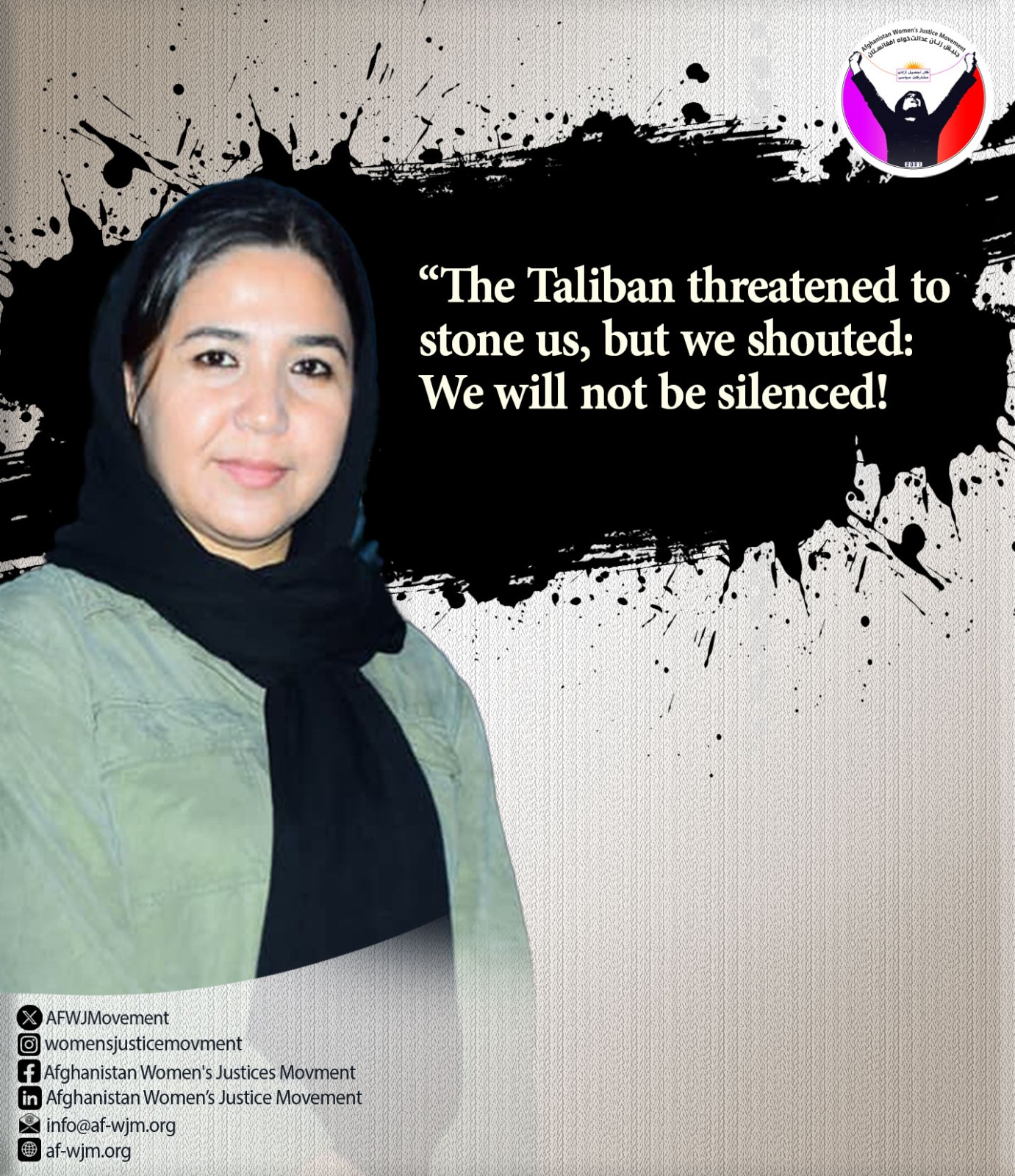
The physical and psychological torture was severe, including electric shocks, being beaten with the butts of rifles, kicks, and constant mental pressure. The threats they made, such as being sentenced to stoning, were terrifying. I didn't know if my family was alive or dead. Yet, all these experiences only served to strengthen my resistance and my will to fight.
women Justice Movement: How were you able to regain your strength and return to activism after your release?
Parwana Ibrahimkhel Najrabi: Imprisonment made me more resilient. It showed me that the hardships we face outside are still bearable compared to the cell. After my release, I decided to continue my struggle with all my might. Freedom, for me now, means "peace"—the personal peace of a woman and peace within society. It means a woman can live without fear, make her own decisions, and enjoy her rights.
women Justice Movement: Do the torture and prison experiences still have a psychological impact on you today?
Parwana Ibrahimkhel Najrabi: Definitely. The physical and psychological scars of torture remain. I live with the trauma and the physical pain. However, I am under psychiatric care and stay in touch with my therapist. I have accepted that prison and torture were parts of the path I chose for my struggle.
women Justice Movement: After enduring so much in Kabul, how do you feel about your homeland now that you are in exile?
Parwana Ibrahimkhel Najrabi: After enduring all that pain in Kabul, I was eventually forced to migrate. Leaving your homeland is never easy, especially when you love it as much as your own life. I feel as though only my body is in a different country, while my soul remains in the streets and alleys of Kabul. At night, my dreams are filled with images of Kabul, and during the day, my mind is constantly there.
women Justice Movement: Has your international advocacy yielded any results or hope for women currently inside Afghanistan?
Parwana Ibrahimkhel Najrabi: Absolutely. After reaching Germany, I expanded my efforts. In 2022, I spoke at the UN Human Rights Council and the European Parliament about gender apartheid. When I convey the voice of women to the world, I receive messages from girls inside Afghanistan saying that I have given them hope. This proves that the struggle beyond the borders has a real and positive reflection on the lives of women inside the country.
women Justice Movement: How do you hope to inspire the younger generation of Afghan women who are witnessing your struggle?
Parwana Ibrahimkhel Najrabi: In the current situation, our continued resistance after prison and torture is an inspiration in itself. We want the younger generation to know they must not remain silent. Continuing the struggle shows that the voice of women cannot be silenced.
women Justice Movement: To what extent do you believe the international community has failed to address the systemic oppression of Afghan women?
Parwana Ibrahimkhel Najrabi: The international community has failed to do what we expected. There have been serious shortcomings, especially regarding the educational and political restrictions on women. Many countries prioritize economic or political interests and continue to engage with the Taliban, which has allowed this catastrophic situation to persist.
women Justice Movement: If an opportunity for negotiation with the Taliban arose, would you participate?
Parwana Ibrahimkhel Najrabi: Based on my experience, no. There is no rational or humane basis for negotiating with a group that knows nothing but horror, violence, and repression. Their goal is to silence women, and any dialogue without a fundamental change in their behavior is meaningless.
women Justice Movement: Given the heavy censorship in Afghanistan, what are the best ways to ensure the voices of women inside are heard globally?
Parwana Ibrahimkhel Najrabi: Given the heavy censorship, the best way is through social media. We stay in touch with women inside, receiving their news and protest reports. Documenting atrocities through audio, video, or text is a vital tool for advocacy and global awareness.
women Justice Movement: Some critics target Afghan women activists for their personal choices or attire once they are abroad. What has been your experience with this online abuse and the attempts to silence you?
Parwana Ibrahimkhel Najrabi: These criticisms are merely excuses. Their real goal is to suppress women's voices and prevent them from achieving independence. Clothing is a personal choice. Whether I choose to wear a headscarf or not, it harms no one. The insults come from men who cannot stand to see independent and active women in society.
Closing:
We thank Ms. Parwana Ibrahimkhel Najrabi for sharing her experiences and insights. Her narrative is an honest portrayal of the resilience and courage of women fighting for justice in the most difficult circumstances.
Interviewer: Zarifa Salangi
Share: