Bahar Khamosh, an Afghan woman and activist, has experienced a life marked by hardship, loss, resilience, and resistance. From forced marriage and becoming a mother at a young age to losing her mother and sister, her life has been shaped by painful experiences and difficult choices.
She has spent parts of her life in Afghanistan and Iran and has also been involved in social and women’s empowerment initiatives. In this interview, Bahar speaks about her personal experiences, migration, discrimination faced by Afghan migrants, and her fears and concerns while living in Pakistan.
Her story offers a glimpse into the lives of women who, despite deep wounds, loss, displacement, and social pressure, continue to search for a safer and more dignified future for themselves and their children.
Women’s Justice Movement: Please introduce yourself to the readers of the Women’s Justice Movement website.
Bahar Khamosh:
Bahar Khamosh is my pseudonym. I was born on April 4, 1997, in Isfahan, Iran. I completed my education through the 12th grade.
I worked with the Aga Khan Foundation in a women’s economic empowerment program, including savings groups. I also participated in cultural initiatives organized by PEN Afghanistan and contributed to campaigns related to women’s menstrual health, including the distribution of essential materials to families.
Women’s Justice Movement: What kind of family did you grow up in? What role did your mother play in shaping your personality? What is the most painful memory of your life?
Bahar Khamosh:
I grew up in a deeply religious and traditional family.
My mother played a very important role in shaping my character and the path of resistance that my two sisters, Hoda Khamosh and Samira Khamosh, and I have taken. From her, I learned how to stand up for myself in a society that does not easily accept women’s progress and independence.
My mother was my first role model of resistance. After her, my two sisters also became important sources of inspiration in my life.
My childhood was a mixture of both happy and painful memories, but the most painful memory of my life is the loss of my mother. It remains one of the heaviest and most painful experiences of my life.
Women’s Justice Movement: How old were you when your mother died, and how did her loss affect your future?
Bahar Khamosh:
I was about 14 years old. I lost my mother on June 21, 2012.
It was four o’clock in the morning when I saw my mother hanging. I screamed and fainted. When I regained consciousness, everyone had gathered around her.
I can never forget seeing my mother in the darkness that night. Even today, darkness reminds me of that night and feels like hell.
Losing my mother broke me. I can never erase from my mind the suffering she endured throughout her life. She was a woman who fought against the countless judgments and pressures of society to keep her children alive.
According to my understanding and the experience of our family, her death was never properly or fairly investigated.
After my mother’s death, our lives became extremely difficult. We were girls who did not even know how to prepare food, yet we were forced to bake bread in a hot traditional oven.
For a while, we lived under the care of my eldest aunt. Later, we moved to Kabul. I resumed my education there and entered the eighth grade. After that, our guardianship was entrusted to my uncle’s wife.
Women’s Justice Movement: How did the killing of your sister happen?
Bahar Khamosh:
It happened at our home. One evening, my sister Safia was shot and killed for refusing a forced marriage.
At the time Safia was killed, I was in Iran with my husband.
My cousin had proposed to Safia, but she had rejected his proposal. One evening, after Safia had finished her prayers, she was shot several times in the neck. According to our family’s account, my cousin was responsible for her killing.
Safia, covered in blood, fell into Hoda’s arms. Hoda tried everything she could to help her. She screamed and called for help, but no one came to my sister’s aid.
Safia and I were twins. We went to school together and grew up together. I loved her more than anyone. I still cannot forget her death or the emptiness left by her absence.
I wish I could hold her in my arms one more time.
Women’s Justice Movement: How old were you when you got married? Was the marriage your own choice?
Bahar Khamosh:
When I returned from school, my family had already made the decision for me without asking for my consent. I became engaged at 15 and married at 18.
The marriage was arranged under family pressure and without my consent. I did not even know my future husband.
I spent four years of my life wishing I could die. That suffering cannot be explained in a few sentences.
Women’s Justice Movement: What did becoming a mother mean to you under those circumstances? What is your relationship with your children?
Bahar Khamosh:
I was 19 when my daughter, Hasna, was born on August 18, 2017.
I became pregnant under pressure from my husband’s family. They believed that if I did not have a child, I might run away or seek a divorce.
But after my daughter was born, I experienced a different feeling. I began to hope for life again. My daughter changed the direction of my life and, in many ways, became the reason I continued living.
My relationship with my children is full of love and affection. They are the reason I keep going. I hope they grow up to become useful members of society, never experience family conflict or the loss of a mother, and never have to give up their education because of marriage.
Women’s Justice Movement: How many years did you live in Iran, and how was life there different from Afghanistan?
Bahar Khamosh:
I lived in Iran for nine years. The first years were particularly difficult. I had lost my sister, and I had no previous experience of living away from my family in another country.
In my experience, however, life in Iran was better than life in Afghanistan in many respects. When I had the opportunity to work and achieve financial independence, I felt I had greater control over my own life and did not have to answer to others for every decision.
Despite these advantages, we also experienced many difficulties. No place in the world can fully replace one’s own country. Discrimination against Afghan migrants was something I experienced repeatedly.
I remember going to Nasim Shahr to have my daughter registered and assessed. On the bus, people were insulting Afghan migrants so much that I held my daughter’s mouth shut so she would not speak and no one would realize that we were Afghans.
Especially after the twelve-day war between Iran and Israel, the situation became even more difficult for many Afghan migrants. Wherever we went, we faced insults and humiliation. I was even afraid to travel anywhere in my own car.
In my view, migration is one of the hardest experiences a person can go through.
Women’s Justice Movement: Who was your role model as you continued through life?
Bahar Khamosh:
I learned most of my life lessons from the hardships I experienced. Pain, suffering, loneliness, forced marriage, the deaths of my mother and sister, migration, and raising my children all shaped who I am today.
Alongside these experiences, my mother and my two sisters, Hoda Khamosh and Samira Khamosh, have also been important role models in my life.
Women’s Justice Movement: What is your greatest concern in Pakistan?
Bahar Khamosh:
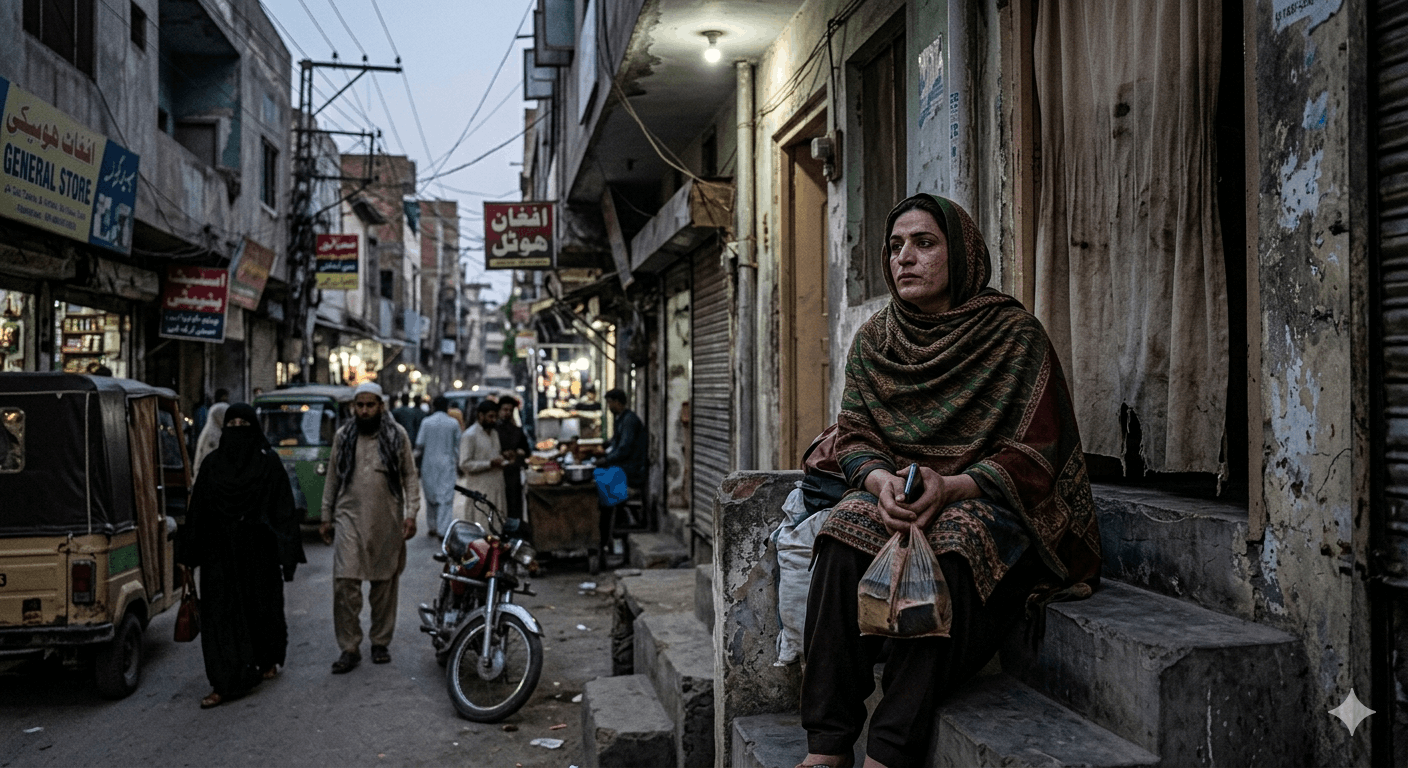
Uncertainty about my future, not having a valid visa, the lack of employment, and the constant fear of the police.
Staying at home for weeks to keep my children safe is extremely exhausting. I am tired, but I continue to stand because of my children.
Their emotional well-being has also been affected. Living in fear and silence is extremely difficult.
Women’s Justice Movement: What message would you like to give women who are experiencing problems similar to yours?
Bahar Khamosh:
To women who are experiencing pain, suffering, and hardships similar to mine, I say:
Do not remain silent. Silence does not make injustice disappear; it only wears a person down.
You are human beings, and you have the right to defend your rights and seek justice through the law.
Life is not meant only to be endured. You have the right to build a life of your own, to grow, and to experience the dignity and possibilities of life.
---
The Women’s Justice Movement thanks Bahar Khamosh for taking the time to share part of her personal story and experiences with our readers.
Bahar’s story reminds us that behind many silences are stories of pain, violence, loss, displacement, and resistance. Listening to and amplifying the voices of women like her is an important step toward greater awareness, justice, and social change.
Interviewer: Zarifa Salangi
Share: