Women’s Justice Movement Discusses Expansion of Religious Schools and Impact on Children in Afghanistan
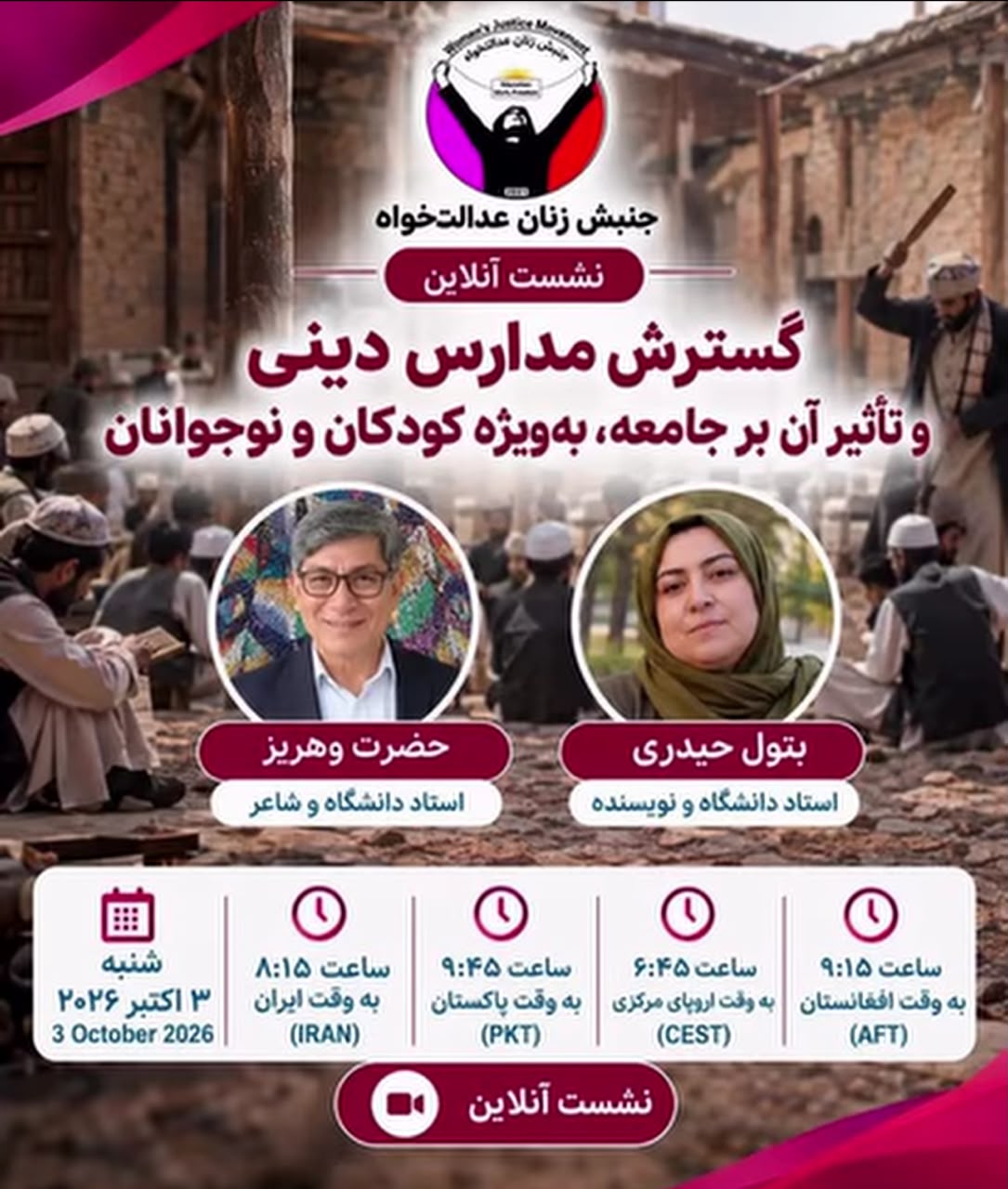
The Women’s Justice Movement (WJM) held its weekly online meeting on October 3, 2026, to examine the expansion of religious schools in Afghanistan and its potential impact on children and adolescents.
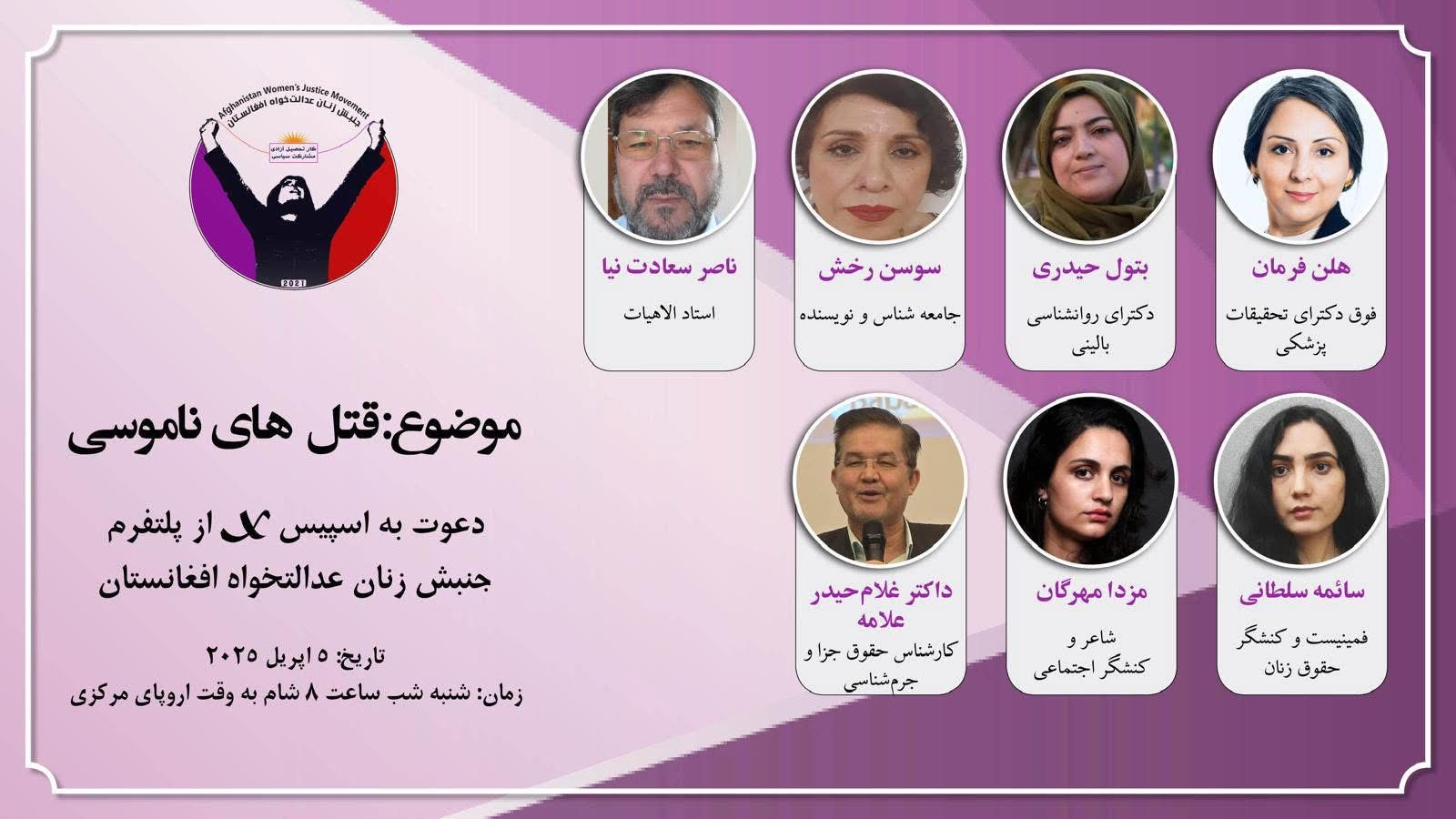
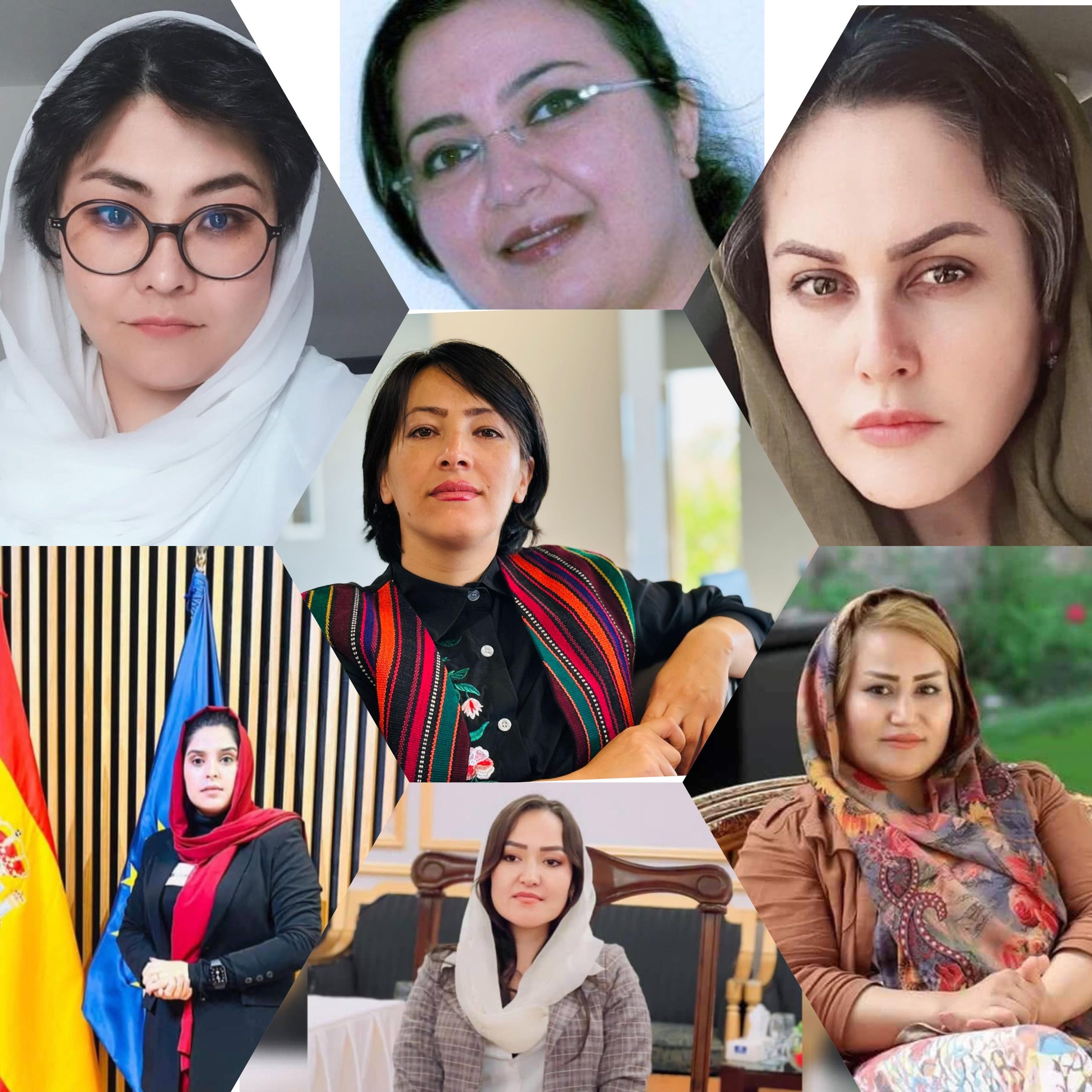
The discussion brought together writer and poet Hazrat Wahrez, psychologist and writer Batool Haidari, and moderators Zolqia Zarifi and Shabana Shabdeez. Participants examined the historical growth of religious schools, their educational content and teaching methods, and the possible effects of such environments on children’s psychological and social development.
Speakers Examine Education, Violence and Young People’s Development
Hazrat Wahrez discussed the historical development of religious schools during the period of resistance against the Soviet Union. He emphasized the importance of education and highlighted the role educated women can play in helping prevent young people from becoming influenced by extremist ideologies.
Batool Haidari focused on the psychological consequences of violence and humiliation against children. She said such experiences can contribute to fear, anger and feelings of worthlessness, while emphasizing the importance of family support and protecting children’s psychological well-being.
During the discussion, Gholam Rasoul Parsi also highlighted the potential long-term effects of prolonged education in such environments, particularly on how children may perceive the world, women and people who hold different views.
WJM Calls for Inclusive Education and Protection of Children
Participants stressed that the concern is not religious education itself, but also the content being taught, teaching methods and the limited space given to science, arts, questions and critical thinking.
The discussion also raised concerns about violence, physical punishment and humiliation in educational environments and their possible consequences for children and adolescents.
The meeting concluded with calls for diverse and inclusive education, stronger protection of children’s rights, prevention of violence in educational settings and continued public discussion about how educational content can shape the future generations of Afghanistan.
Share: