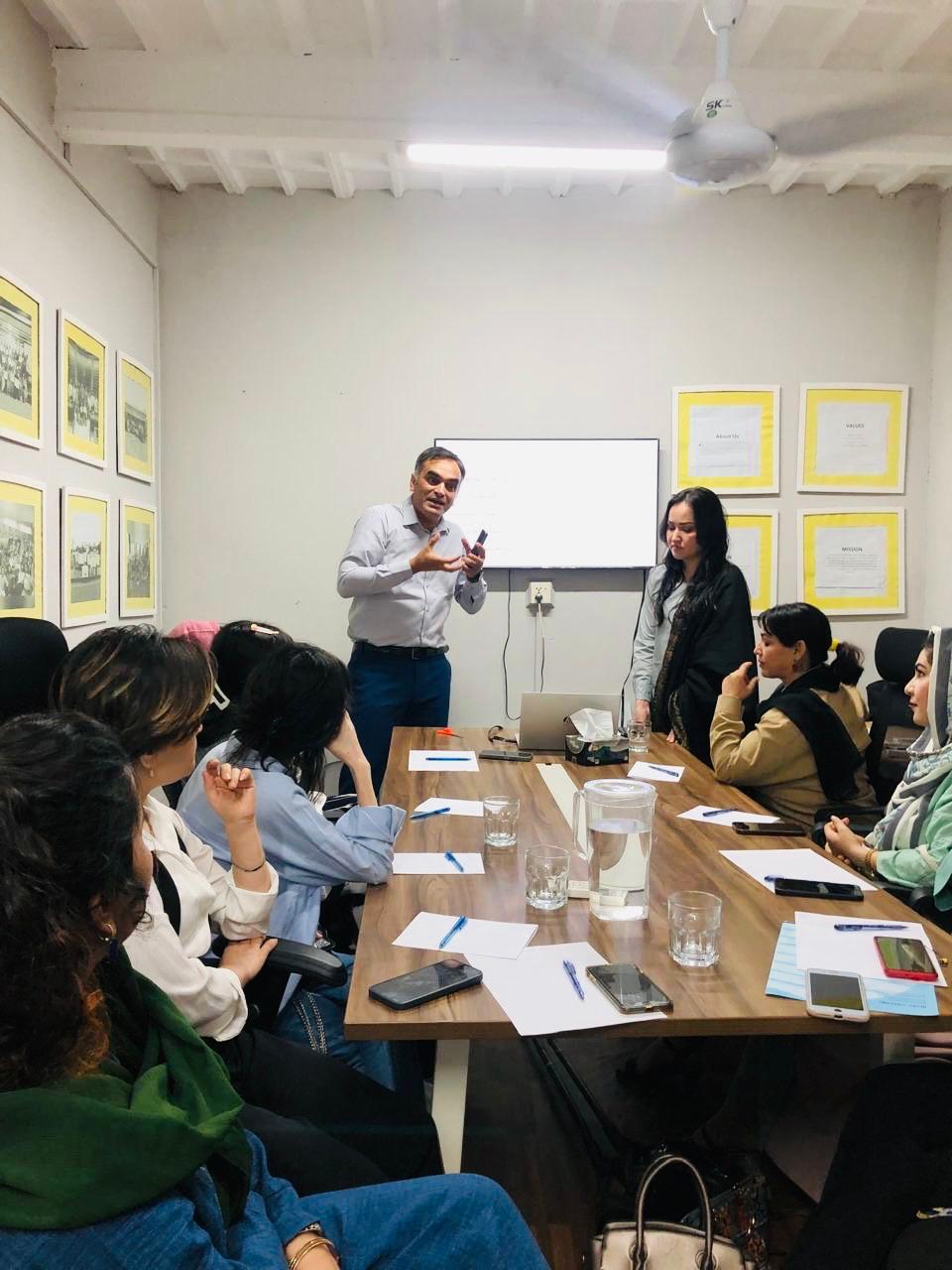
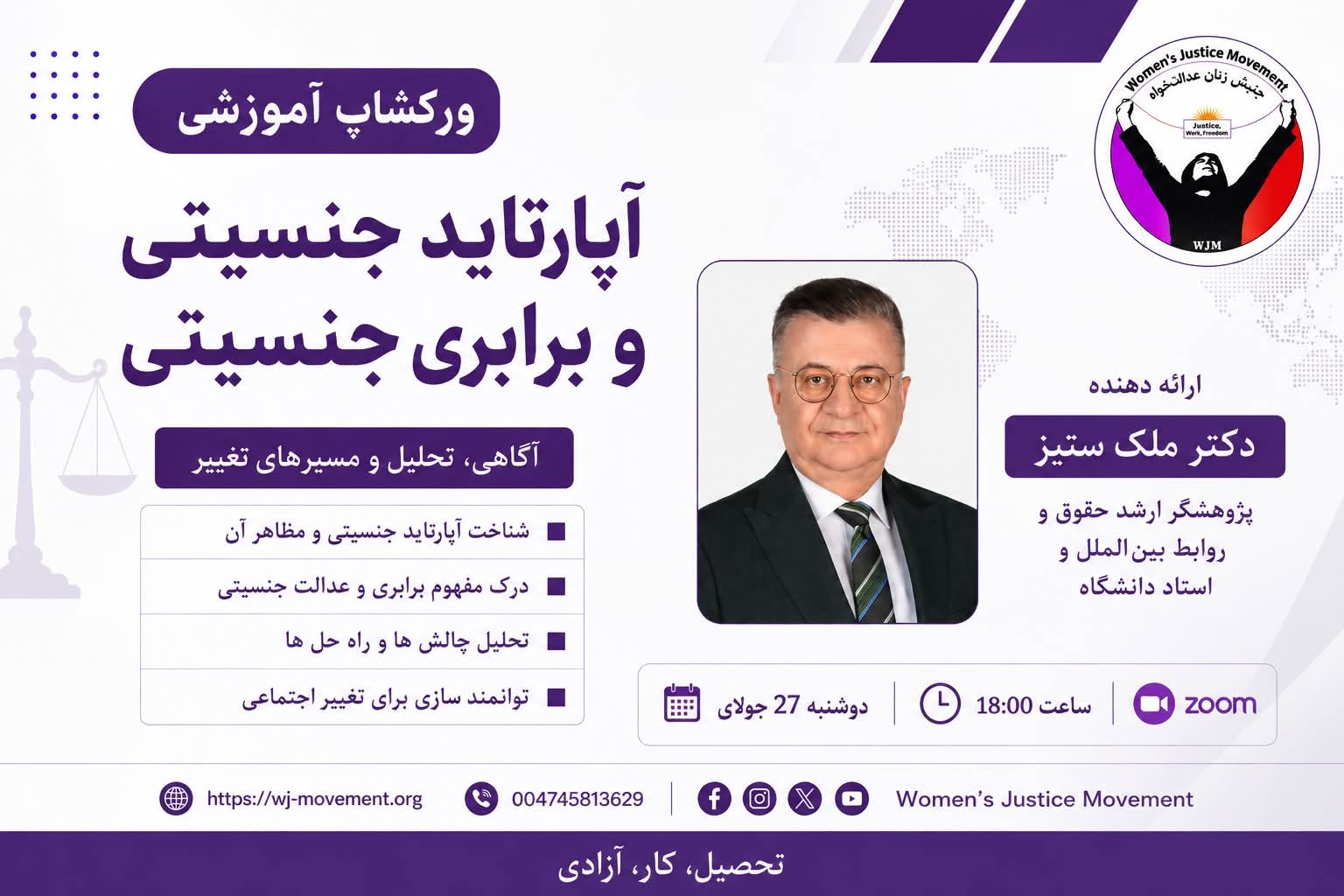
As part of its ongoing commitment to advancing women's rights and promoting gender justice, the Women’s Justice Movement (WJM)** organized an online seminar titled "Gender Apartheid and Gender Equality: Understanding the Concepts, Challenges, and Pathways to Justice and Equality." The session was presented by Dr. Malek Setiz and brought together human rights defenders, researchers, academics, women's rights advocates, and participants committed to advancing equality and justice.
The seminar aimed to deepen participants' understanding of gender apartheid as an emerging concept in international human rights discourse while creating a platform for meaningful dialogue on the legal, political, and social challenges surrounding its recognition. At a time when systematic discrimination against women—particularly in Afghanistan—has drawn increasing international attention, the discussion highlighted the urgent need for stronger legal frameworks and coordinated global action to confront institutionalized gender-based oppression.
During the keynote presentation, Dr. Setiz provided a comprehensive analysis of the concept of gender apartheid, tracing its development within international legal and human rights discussions and distinguishing it from other forms of gender discrimination. The presentation examined the structural nature of policies that systematically deny women and girls their fundamental rights and freedoms, emphasizing the importance of recognizing these practices as severe violations of international human rights standards.
The discussion also explored the responsibilities of the international community, governments, United Nations mechanisms, and civil society organizations in documenting violations, strengthening accountability, and supporting legal and advocacy efforts aimed at ending institutionalized discrimination. Participants reflected on the existing gaps in international law, the challenges surrounding the formal recognition of gender apartheid, and the need for stronger mechanisms to ensure justice for women living under systems of gender-based oppression.
One of the most engaging parts of the seminar was the interactive discussion session, where participants shared questions, perspectives, and practical recommendations. The exchange focused on the legal and political challenges of recognizing gender apartheid, strategies for strengthening international advocacy, and opportunities to build broader global solidarity in support of women's rights. The discussion demonstrated the value of collaborative dialogue among scholars, activists, and human rights defenders in developing more effective approaches to combating systemic discrimination.
Participants also emphasized that achieving gender equality requires more than legal reform. It demands sustained advocacy, public awareness, comprehensive documentation of human rights violations, and stronger cooperation between grassroots movements, civil society organizations, researchers, and international institutions. The seminar reaffirmed that education, dialogue, and evidence-based advocacy remain essential tools for promoting accountability and advancing justice.
The Women’s Justice Movement believes that creating spaces for informed dialogue and knowledge-sharing is fundamental to strengthening the global movement for gender justice. By bringing together experts and advocates from diverse backgrounds, such initiatives foster collaboration, encourage innovative solutions, and amplify the voices of women who continue to resist discrimination and fight for their fundamental rights.
At the conclusion of the event, the Women’s Justice Movement expressed its sincere appreciation to all participants for their active engagement and thoughtful contributions. The Movement also extended its heartfelt gratitude to Dr. Malek Setiz for delivering an insightful and thought-provoking presentation. WJM hopes that this series of educational dialogues will continue to strengthen awareness, deepen international cooperation, and contribute to more effective advocacy for the rights, dignity, and equality of women and girls—particularly those living under systems of institutionalized gender discrimination.
Share: