From Taliban Imprisonment to Exile: Manizha Sediqi’s Unwavering Struggle for Justice and Equality
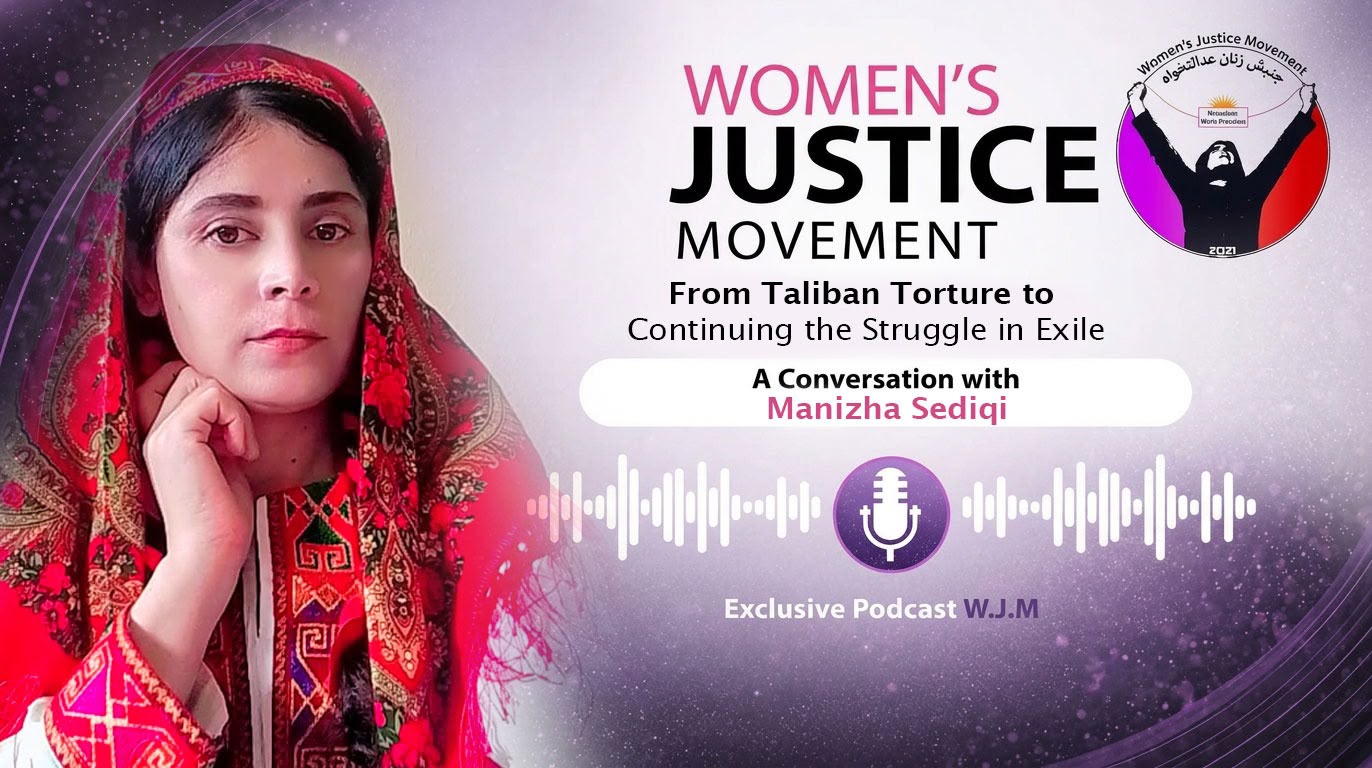
Manizha Sediqi, a women’s rights activist and human rights defender from Afghanistan, was arrested for protesting against Taliban policies and endured months of imprisonment and torture. Following her release, security threats forced her to leave Afghanistan and embark on a difficult journey of displacement. Despite these hardships, she continues her struggle for justice and equality.
In this interview with the Women’s Justice Movement (WJM), she shares her experiences of protest, arrest, imprisonment, torture, displacement, and the establishment of Voice of Women for Justice and Equality (VOWJE).
WJM: Before becoming known as a woman protester and human rights defender, what was your life like, and what aspirations did you have?
Manizha Sediqi: My life was marked by hardship from early childhood. When I was only six months old, my entire body suffered burns from boiling water. When I was approximately one year old, my family was forced to leave Kabul due to rocket attacks by Gulbuddin Hekmatyar and return to our home province of Parwan. I spent my childhood in Parwan until the eighth grade, after which we returned to Kabul.
From my teenage years, I was interested in political affairs. I followed political television programmes and discussions and always dreamed of becoming a genuine and influential politician. Ahmad Saeedi was one of the figures whose views and political analyses inspired me.
After taking the university entrance examination, I was admitted to the Mathematics Department at Kabul Education University. Although mathematics was not my primary interest, I continued my studies in accordance with my family’s wishes and obtained a bachelor’s degree. I wanted to study law, but my family opposed the idea because of insecurity and the potential risks I might face in that profession. I subsequently decided to study midwifery.
While studying at a midwifery institute, I began working in 2019 as a women’s rights advocate at the Legal Research and Civil Society Organisation of Afghanistan (COA). My goal was to complete my midwifery studies, take the entrance examination at Kabul University, and eventually become a specialist in obstetrics and gynaecology.
However, following the collapse of the Republic and the Taliban’s return to power, the organisation where I worked was shut down, and its director was imprisoned. Educational institutes were also closed. After approximately two months, we were able to take our final semester examinations and graduate, but I was no longer able to pursue further education. I subsequently began working as a nurse in the emergency department of a hospital in Kabul.
As schools and universities were closed to girls, women were deprived of employment and participation in public life, and Taliban restrictions continued to intensify, I could no longer remain indifferent. I therefore joined women’s protest movements and participated in street demonstrations and indoor protest gatherings.
WJM: What transformed you from an observer into a woman protester?
Sediqi: What primarily motivated me to protest were the aspirations, beliefs, and goals I had held since my teenage years. I had plans for my future. I wanted to study, work, and play a meaningful role in society. However, through their restrictive and oppressive policies, the Taliban took away not only my future but also the futures of millions of women and girls in Afghanistan.
When I saw girls being denied access to schools and universities, and women being prevented from working and participating freely in society, I could no longer remain silent. My sisters were also deprived of education, even though one of them had been admitted to study medicine. Witnessing this situation was extremely painful and unbearable.
I therefore decided to raise my voice in protest and stand against this injustice. I knew that protesting against the Taliban could result in arrest, torture, imprisonment, and even the loss of my life. However, I believed that remaining silent in the face of the denial of human rights meant accepting oppression.
I protested not because I was unafraid of danger, but because I believed that fear should never force us into silence when human rights are being taken away.
WJM: What role did education, books, and libraries play in your struggle?
Sediqi: I believe that education is the only way for people to overcome ignorance and move from darkness towards enlightenment. Education is the foundation of an informed and free society, which is why the Taliban fear the education of women and girls.
An educated woman can raise informed children, transform society, and stand against extremism and violence. Terrorist groups benefit from societies deprived of education and awareness because informed individuals cannot easily be manipulated to serve their objectives.
For this reason, alongside our protests, we worked to promote a culture of reading and awareness. We reopened a library in Kabul called the Women’s Library, where we encouraged women, girls, and students to read books. We also read books there ourselves and sought to provide a space for learning and intellectual development.
However, the Taliban became aware of the library’s activities and shut it down. Nevertheless, closing a library does not mean the end of knowledge and awareness.
For me, education and awareness were among the most important tools in the struggle against extremism and oppression. The Taliban may be able to close the doors of a school, university, or library, but they cannot permanently erase people’s thoughts and determination to learn.
WJM: How were you arrested on 8 October 2023? What happened that day?
Sediqi: On 8 October 2023, one of my colleagues sent me a message asking me to come to the Haji Yaqub intersection in the Shahr-e Naw area of Kabul to discuss plans for a protest in support of colleagues who had previously been arrested.
When I arrived, I sent my colleague a message asking where she was. I did not know that her phone was in the possession of the Taliban. In response, I received a message instructing me to go to the Life Star trading company, walk upstairs, and wait on the first floor. I was told that they were there.
As soon as I went upstairs, a man rushed out of the office, came down, and grabbed me firmly from behind. He took my phone from my hands. I asked what I had done and explained that I had come to meet my colleague. However, they placed a black bag over my head, handcuffed my hands behind my back, and forced me into a vehicle.
Throughout those moments, I cried and repeatedly asked: “Who are you? What have I done wrong? Where is my colleague?”
During the journey, I heard someone say, “We have arrested Manizha Panjshiri.” They demanded the password to my phone. I told them that my phone was private and that I would not unlock it.
They threatened to torture me in prison and bring in my family to force me to unlock the phone. These threats were terrifying because I was more concerned about my family’s safety than my own life.
That day divided my life into two parts: my life before the arrest and my life after falling into the hands of Taliban intelligence.
WJM: What happened to you in prison? What forms of torture, interrogation, and mistreatment did you experience?
Sediqi: The reasons for the Taliban’s harsh treatment of me included not only my participation in protests and advocacy for women’s rights, but also my ethnic identity and my connection to the Shomali region. The Taliban were well aware that the people of Shomali had historically resisted them and had repeatedly stood against them. Because of this history of resistance, they regarded the people of the region with hostility.
My Tajik identity was also one of the issues raised during interrogations and in their treatment of me. The Taliban attempted to portray me as someone affiliated with the resistance.
Another issue that intensified their anger was the discovery of a photograph of Afghanistan’s national hero, the late Ahmad Shah Massoud, on my mobile phone. They found the photograph, printed it, and marked it with a cross. They brought it to me and angrily asked, “Why do you keep Massoud’s photograph on your phone? He is a traitor!”
I responded, “He is my leader. I love and respect him.”
This response intensified their mistreatment of me. Because I had a photograph of Ahmad Shah Massoud on my phone and regarded him as my leader, I was repeatedly subjected to insults, threats, and torture. They even told my father, “Why did your daughter keep Massoud’s photograph on her phone? This is another reason why we will not release her.”
In addition, they accused me of participating in protests, having connections with the resistance front, and burning a photograph of the Taliban leader. They showed me videos and photographs of demonstrations and attempted to portray me as one of the leading figures and organisers of the protest movements.
On several occasions, they forced me to give written and video-recorded confessions. They attempted to make me say that I had organised protests on behalf of the resistance front and for the purpose of leaving Afghanistan. However, I rejected these accusations.
After months of interrogation and torture, two court hearings were held, and I was ultimately sentenced to one and a half years in prison. I appealed the sentence, but my appeal was also met with violence.
What happened to me was therefore not solely a consequence of protesting and defending women’s rights. My Tajik identity, my connection to Shomali, the region’s history of resistance, and my possession of a photograph of the leader I admired, Ahmad Shah Massoud, were also used as pretexts for insults, torture, and continued imprisonment.
WJM: Was the interview conducted with you inside prison given with your consent?
Sediqi: No. That interview was not conducted voluntarily or with my consent. It was one of three conditions imposed by the Taliban for my release. They wanted me to repeat statements favourable to their regime, which they had written in advance, through media outlets under their control.
During that interview, I was forced to say that I had not been subjected to torture or mistreatment, that I had access to medical care, that my detention conditions were good, that the food was adequate, and that my family was permitted to visit me.
The reality, however, was entirely different. During my first court hearing, my lawyer was not allowed to enter the courtroom, and my family was also denied permission to attend. I had no access to a doctor in prison. During that period, I developed breathing difficulties and an eye condition. After approximately 15 days, my eyesight deteriorated severely, and I felt as though a curtain had been placed in front of my eyes.
After my release, when I consulted a doctor, I was told that my vision had deteriorated because of an illness I had contracted in prison. Many other prisoners had also developed the same condition.
The only statement I was able to make courageously during that interview was:
“If you have imprisoned me here for the crime of protesting, I have already spent six months in prison. I want you to release me so that I can spend Eid al-Fitr with my family.”
That interview did not reflect the reality of my life in prison. Rather, it was part of the Taliban’s coercion to obtain confessions and construct a different image of prisoners’ conditions.
Approximately one month after that interview, on 7 April 2024, I was released.
WJM: What was your condition following your release, and why were you forced to leave Afghanistan?
Sediqi: Following my release on 7 April 2024, I was no longer the person I had been before. I had suffered severe physical and psychological harm. My eyesight was impaired, my memory had significantly deteriorated, and I experienced swelling in my hands and face, which I attributed to the use of camphor in the water, food, and bread provided in prison.
I constantly felt drowsy and weak. Whenever someone came to visit me, I was unable to sit with them for an extended period because I would quickly become exhausted.
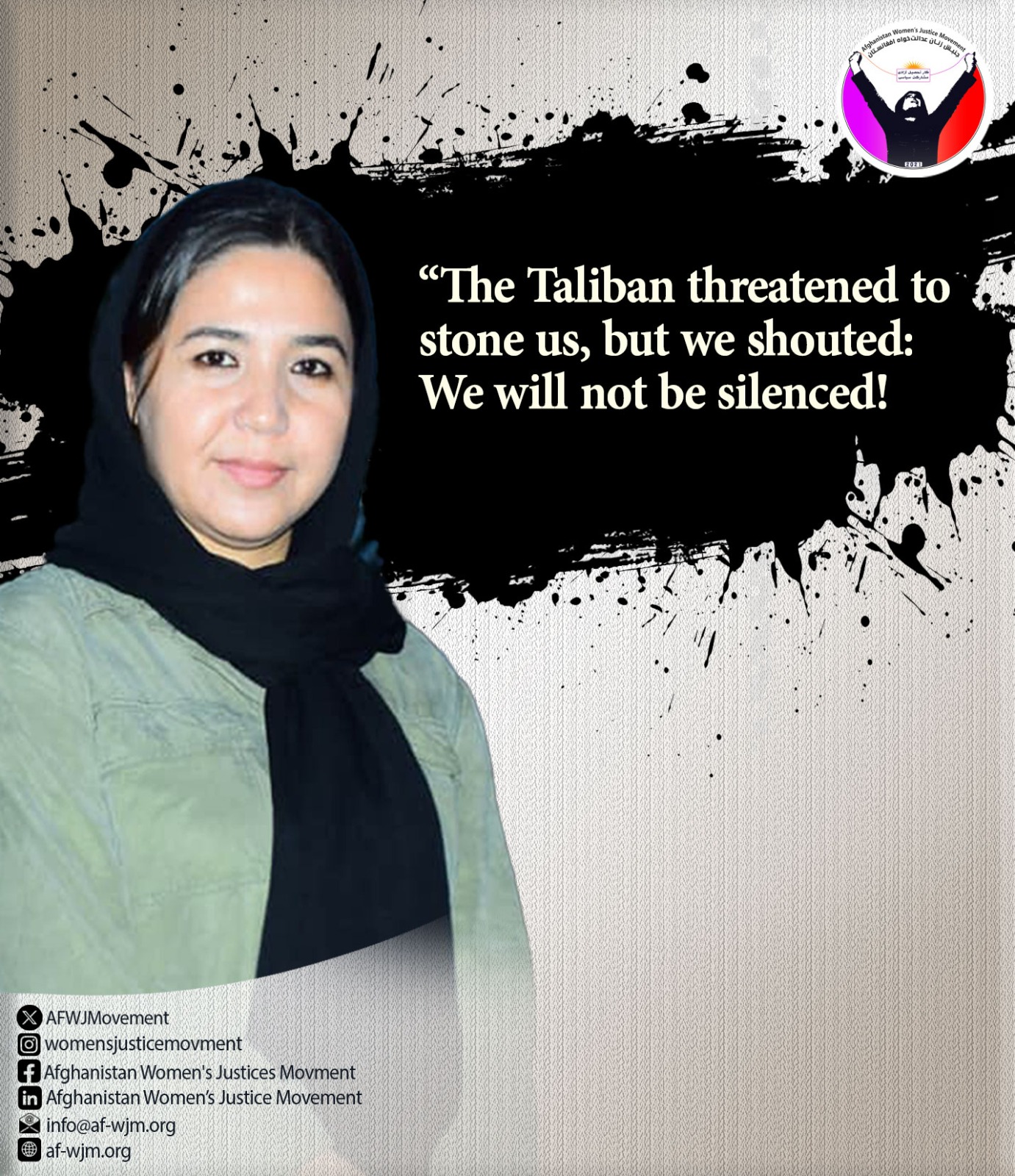
My family had also provided guarantees to secure my release. The Taliban had obtained commitments from them that I would not leave Afghanistan or speak out against the Taliban, and that I would cooperate with their regime. Otherwise, they threatened to imprison me again. They even spoke of a 20-year prison sentence and death by stoning. They also threatened to kill my family in front of me under the pretext of having connections with the resistance front.
I considered cooperation with the Taliban a betrayal of my beliefs and aspirations. I repeatedly told myself that death would be preferable to remaining silent in the face of oppression and cooperating with those who had deprived the people, particularly women, of their rights.
Approximately two weeks after my release, I received a call from Directorate 40, instructing me to report there together with my guarantors. My phone and belongings, which had been confiscated during my arrest, were still being held by the Taliban at Directorate 40.
This call terrified my family. Everyone feared that I would be arrested again. We switched off our phones, discarded our SIM cards, and began searching for a smuggler who could help us leave Afghanistan during the night.
It was no longer safe for us to remain in Afghanistan.
WJM: How did you escape from Afghanistan to Pakistan?
Sediqi: After deciding to leave Afghanistan, my family found a smuggler. We were told that we would have to travel at night to Kandahar and then to an area called Wesh.
We purchased transport tickets and left our neighbourhood under the cover of darkness. To avoid attracting attention, we divided into several groups. After reaching the main road, we took taxis to the vehicles travelling towards Kandahar.
Along the way, the Taliban inspected vehicles, questioned passengers about their destinations, and demanded their identity documents. The women in my family wore black headscarves and hijabs and covered their faces. I rested my head on my sister’s lap to avoid being recognised. My mother lay on the floor of the vehicle with one of the children, while my father lay there with another child. They covered themselves with a piece of cloth so that the Taliban would assume women and children were sleeping in that part of the vehicle and would not approach them.
During inspections, the Taliban first looked at their phones and then examined the passengers and their faces. I kept asking the driver to continue driving because I feared the Taliban would discover that we were fleeing. That night was filled with fear and anxiety.
We reached Wesh in the morning. The smuggler took us to a location with shipping containers and warned us not to speak loudly or leave the premises. We later received information that the Taliban had arrived in the area and discovered that people were being transported through smuggling networks.
That evening, the smugglers transported us to an alley in a vehicle to avoid attracting the Taliban’s attention. We were supposed to transfer to other vehicles there. Upon arrival, the driver contacted the smugglers, who informed him that the Taliban had become aware of the situation and that we had to leave immediately. They then directed us to a compound.
Two vehicles had been parked between shipping containers inside the compound so that they could not be seen. We boarded the vehicles and travelled through villages. Along the way, we encountered Taliban vehicles lying in wait on three occasions. There was also a risk of being shot by Pakistani military personnel along the route through Balochistan. We encountered checkpoints operated by the Pakistani Taliban, where fuel and money were provided in exchange for permission to pass.
Eventually, we reached Balochistan, where we spent one night. We were then handed over to other individuals and transported to Quetta in different vehicles. From Quetta, we travelled towards Islamabad. After five days and five nights of travel, on 27 April 2024, we reached our destination in Pakistan.
We had departed Afghanistan on 22 April 2024. For us, this journey was not merely a geographical passage. It was an escape from threats, imprisonment, and the danger of falling into the hands of the Taliban once again.
WJM: What was your life like in Pakistan, and what challenges did you face?
Sediqi: After arriving in Pakistan, we faced numerous challenges. We did not have valid visas, our financial situation was extremely difficult, and because we lacked legal residency documents, almost no one was willing to rent us accommodation. A civil society activist used their own visa to secure a two-room house for us at a very high rental cost.
Although we had left Afghanistan, the fear of Taliban threats and assassination remained with us. I felt that Pakistan was not a safe place for us either, and I regarded it as the Taliban’s second home. For approximately eight months, I confined myself within the four walls of our home and did not go outside because of fear.
After about eight months, I decided to resume my activism and struggle. I gave an interview to a television channel from Afghanistan about the torture and mistreatment I had experienced in Taliban custody. I also participated in gatherings and indoor protest programmes.
During this period, many women protesters who had previously been imprisoned were receiving support from organisations and were accommodated in guesthouses. Unfortunately, I did not receive such support, despite being among the first women protesters to have spent an extended period in Taliban custody.
After some time, conditions for refugees and migrants from Afghanistan in Pakistan deteriorated, and arrests and deportations began. We were forced to flee from Islamabad to Rawalpindi. Approximately three months later, arrests of migrants also began in Rawalpindi, forcing us to relocate again, this time to Attock.
During this period, Food for Thought Afghanistan applied for Pakistani medical visas for some members of my family, and the visas were issued. To complete the procedures and obtain the required visa stamps in our passports, we were required to travel to the Torkham border.
However, because of security risks and my fear of falling into the hands of the Taliban, we could not travel there personally. We therefore paid intermediaries to take my passport to Torkham and complete the visa stamping and related documentation.
Despite all these difficulties, I continued striving to ensure that my voice of protest and advocacy was not silenced. However, life in Pakistan became increasingly difficult due to constant fear, insecure immigration status, and the threat of deportation.
WJM: How did you travel from Pakistan to Brazil and subsequently to French Guiana? What challenges did you face along the way, and how did you establish VOWJE?
Sediqi: Financial difficulties, the lack of secure residency status, the risk of arrest and deportation to Afghanistan, and the constant need to flee from one city to another had made our living conditions in Pakistan extremely difficult.
During this period, Food for Thought Afghanistan secured Brazilian visas for us, referred our case to a shelter organisation, and submitted our case to relevant organisations to raise financial assistance for our relocation and support.
However, even travelling to Brazil was not easy. Individuals holding Pakistani medical visas faced significant travel restrictions, and the Pakistani police did not readily permit them to travel. Our visas were due to expire on the night of our departure, and Pakistan had also suspended the issuance of this type of visa. To obtain permission to travel, we were required to secure a gate pass.
Even after arriving at the airport, we were directed to a section where there was a possibility that our visas could be cancelled. With assistance from Food for Thought Afghanistan and individuals whom the organisation had contacted inside the airport, and who had been paid to facilitate our passage, we managed to overcome this dangerous situation.
The night before our departure, the police came to our home and told us that our visas had expired and that we should pack our belongings to be taken to Haji Camp.
We had obtained a 15-day extension from the Ministry of Interior, which remained valid until the following night, when we were scheduled to travel. The police warned us that if we had not departed by midnight the following day, they would return to take us away.
We were extremely frightened that night, believing that we might be sent back to Afghanistan and handed over to the Taliban.
Eventually, we managed to pass through the airport inspections and overcome the obstacles, board our flight, and arrive in Brazil.
During the first 15 days, we stayed in a hotel, where conditions were relatively good. We believed that we had finally escaped danger and could begin a peaceful life.
However, we were subsequently relocated to a city far from the central area, markets, and supermarkets. Accommodation was arranged for us in a location where we felt that we were not being treated as human beings entitled to urban life and human dignity.
I contacted the shelter organisation several times and sent emails explaining that our accommodation was unsuitable, that my family members were becoming ill due to isolation and difficult living conditions, and that my father and I, in particular, were not doing well.
I also raised concerns that, despite financial assistance having been received for our relocation and support, very little money was being provided to cover our living expenses.
During my stay in Brazil, I decided to establish Voice of Women for Justice and Equality (VOWJE). I developed the organisation’s name and structure and sought to begin its activities. However, difficult living conditions, unsuitable accommodation, and daily pressures prevented me from formally launching its public statements and activities at that time.
Nevertheless, I continued my struggle, and no hardship, obstacle, or restriction could take away my beliefs and aspirations.
Meanwhile, my brother and brother-in-law, who had acted as guarantors for my release from Taliban imprisonment and whom I had brought with me to Pakistan, remained in Pakistan. They did not have visas and faced the risk of deportation.
For this reason, I was compelled to explore another route to secure my family’s safety. Eventually, I decided to bring my family with me to French Guiana.
After arriving in French Guiana, we registered our case. However, initially, we did not even have enough money to purchase food or rent accommodation.
For some time, we lived in the hallway of the home of a fellow citizen from Afghanistan under extremely difficult conditions. To obtain food, for approximately three weeks, I went to the market during the day and collected items discarded by shopkeepers so that we could survive from one day to the next.
After three months, we were provided with a single room for ten people. That room served simultaneously as our home, hallway, and kitchen.
Our accommodation was located far from the central area of French Guiana, approximately six hours away by large vehicles. In fact, we had been placed in a camp in the middle of a forest, where there were no nearby supermarkets or adequate living facilities.
These conditions caused considerable isolation, psychological distress, and hardship for my family.
Eventually, the day of our interview arrived, and we explained all the difficulties and challenging circumstances we had experienced. Following that interview, we were relocated to the central area of French Guiana.
However, our difficulties did not end there. Four months later, our food assistance card was activated, but it has now been inactive for two months, and we have not yet received social financial assistance. Ten of us are living in two small rooms and facing serious financial difficulties.
Our challenges in French Guiana have not been limited to financial hardship and inadequate accommodation. My brother was also attacked in French Guiana by an Arabic-speaking individual who assaulted him with a knife and physically beat him.
This incident increased our family’s anxiety and psychological distress. After enduring imprisonment, torture, threats, and displacement in search of safety and peace, we once again found ourselves confronted with violence and insecurity.
Despite all these hardships, my beliefs and aspirations have remained unchanged.
I established Voice of Women for Justice and Equality (VOWJE) to defend the rights of all people, with a particular focus on women’s rights, justice, equality, freedom, and human dignity.
I want to be a voice for those whose voices have been silenced and to advocate for the rights of people who have been deprived of the opportunity to live freely and equally.
My Message to Women and Girls
Never believe that darkness will last forever. Even when the path of struggle is difficult, we must not lose our hope or our convictions.
We have the right to education, employment, freedom, and participation in shaping our own futures.
My Message to the International Community
Rescuing a woman activist from prison and relocating her to another country does not mark the end of the international community’s responsibility.
Following their rescue, women activists and human rights defenders continue to need security, meaningful support, shelter, adequate living conditions, and opportunities to continue their civil society and human rights activities.
Support must not be limited to transferring individuals from one country to another. It must also provide the conditions necessary for a safe and dignified life.
I am still on the path of struggle because I believe that one day justice will prevail over oppression, and no woman will be punished for demanding her right to education, freedom, and a dignified human life.
The Women’s Justice Movement (WJM) extends its sincere gratitude to Manizha Sediqi for sharing her personal testimony and the difficult experiences of her life and struggle.
WJM hopes that the voices of women who continue to stand for freedom, justice, and equality will be heard more widely.
Interview conducted by: Zarifa Salangi
Women’s Justice Movement (WJM)
Share: