About
Hoda Khamoush, born in 1995 in Iran to Afghan refugee parents, grew up amid the challenges of displacement and the shadows of her homeland’s conflicts. Her parents, both illiterate, worked tirelessly in Iran to sustain the family, while Hoda grew up feeling both connected and distant from Afghanistan, haunted by news of violence, migration, and war.
The family eventually returned to Afghanistan, first to Herat and later to Kabul, where Hoda witnessed firsthand the devastation and the post-war struggles of her country. Despite the scarcity and insecurity, she found moments of warmth and family closeness, which gave her resilience in navigating life amid uncertainty. Later, the family moved to Salang Valley in Parwan, a socially conservative and isolated region, where Hoda and her sisters stood out as girls eager for education.
Hoda’s determination to pursue learning in the face of societal restrictions was unwavering. She studied in makeshift classrooms in a local mosque, later attending a mixed school established by an international organization, becoming part of a pioneering group of girls challenging traditional norms. Her exposure to education and activism broadened the horizons of her peers, inspiring dreams beyond conventional expectations, including aspirations for higher education and professional careers.
Hoda developed a passion for literature, particularly poetry, as a space to explore ideas, question taboos, and express herself freely. She began writing erotic and boundary-pushing poetry, eventually gaining recognition in literary circles. Her first collection, “I Kiss You”, was published to acclaim, and she became known for her fearless engagement with taboo subjects in Afghan society.
Alongside her literary work, Hoda navigated personal challenges, including the loss of her mother and familial pressures. She pursued higher education, managed household responsibilities, and traveled across Afghan provinces, supporting women through cultural and development initiatives. Her experiences deepened her understanding of the realities faced by rural women, shaping her activism and commitment to empowerment.
Hoda also charted her own path in love and marriage, defying societal conventions. She met her husband, Rafi Jassor, through social media, proposing to him twice before their families formally arranged the marriage. Their union reflects Hoda’s belief in self-determination and the pursuit of personal agency, even amid cultural constraints.
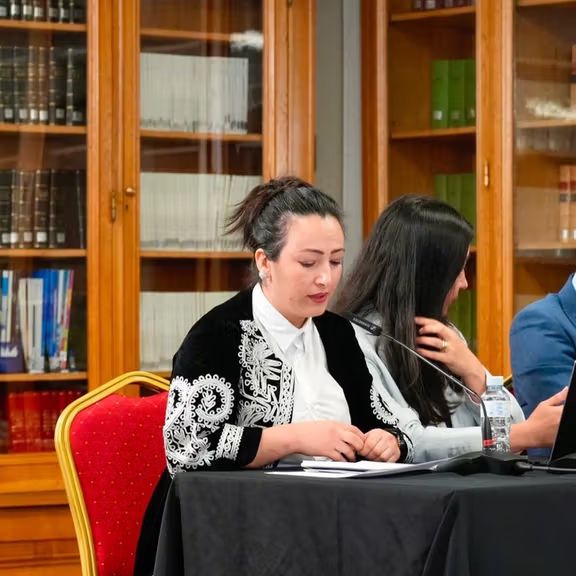
Today, Hoda Khamoush is recognized as a poet, writer, and social activist committed to education, women’s rights, and cultural transformation. Her work continues to challenge traditional norms and inspire a new generation of Afghan girls and women to pursue knowledge, self-expression, and autonomy.
The family eventually returned to Afghanistan, first to Herat and later to Kabul, where Hoda witnessed firsthand the devastation and the post-war struggles of her country. Despite the scarcity and insecurity, she found moments of warmth and family closeness, which gave her resilience in navigating life amid uncertainty. Later, the family moved to Salang Valley in Parwan, a socially conservative and isolated region, where Hoda and her sisters stood out as girls eager for education.
Hoda’s determination to pursue learning in the face of societal restrictions was unwavering. She studied in makeshift classrooms in a local mosque, later attending a mixed school established by an international organization, becoming part of a pioneering group of girls challenging traditional norms. Her exposure to education and activism broadened the horizons of her peers, inspiring dreams beyond conventional expectations, including aspirations for higher education and professional careers.
Hoda developed a passion for literature, particularly poetry, as a space to explore ideas, question taboos, and express herself freely. She began writing erotic and boundary-pushing poetry, eventually gaining recognition in literary circles. Her first collection, “I Kiss You”, was published to acclaim, and she became known for her fearless engagement with taboo subjects in Afghan society.
Alongside her literary work, Hoda navigated personal challenges, including the loss of her mother and familial pressures. She pursued higher education, managed household responsibilities, and traveled across Afghan provinces, supporting women through cultural and development initiatives. Her experiences deepened her understanding of the realities faced by rural women, shaping her activism and commitment to empowerment.
Hoda also charted her own path in love and marriage, defying societal conventions. She met her husband, Rafi Jassor, through social media, proposing to him twice before their families formally arranged the marriage. Their union reflects Hoda’s belief in self-determination and the pursuit of personal agency, even amid cultural constraints.
Today, Hoda Khamoush is recognized as a poet, writer, and social activist committed to education, women’s rights, and cultural transformation. Her work continues to challenge traditional norms and inspire a new generation of Afghan girls and women to pursue knowledge, self-expression, and autonomy.
Email
info@wj-movement.org
Phone
+47 458 13 629