Part One**
Author: Hamia Naderi
In the historical landscape of Afghanistan, the twentieth century emerges at the threshold of modernization with both turbulence and disruption, yet also with a clear sense of hope. Women’s roles during this transition—from political independence to the first foundational modernization projects—have consistently been seen as both active and critical. This first part traces the early historiographical narrative of Amanullah’s era and the initial awakening of women: from the independence of 1919 to the rollback of reforms in 1929 and the re-imposition of the veil in daily life.
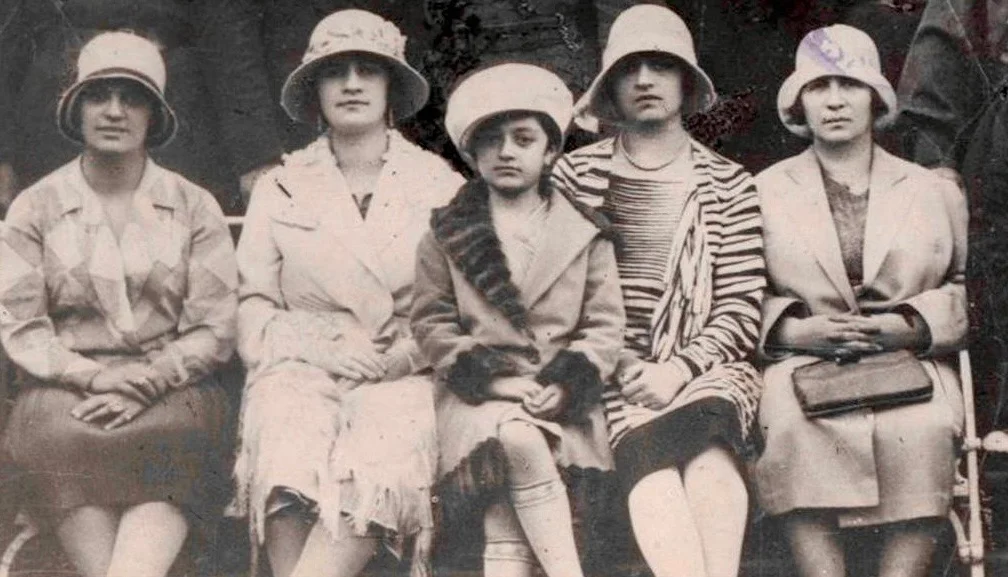
After years of secrecy and distrust toward resolving the civil war, and especially following the formal independence from Britain in 1919, King Amanullah Khan launched a broad modernization project upon returning from his travels in Europe. He believed that independence would be incomplete without the participation and liberation of half the population. In this vision, women were positioned as witnesses to social change and as agents shaping the future of the country. Within this process, Queen Soraya emerged as one of the most prominent figures of the era. Born in Damascus into the Tarzi family, she became a symbol of transformation and a public demonstration of modern lifestyle upon entering the political arena.
By participating in official circles, Soraya distanced herself from traditional coverings and made foreign travel possible for herself and the men of the royal court. These symbolic changes, though quickly met with negative reactions from traditionalist and tribal factions, illustrated what a portion of society envisioned as “modernity.” During this decade, practical steps were also undertaken. The newspaper *Irshad al-Niswan*, founded in 1921, amplified women’s voices in the public sphere and created a space for exchange of ideas and educational information for women.
Alongside these symbolic movements, educational initiatives expanded. The Masturat School, established in January 1921 in Kabul’s Shahrara area under the supervision of Asma Rasmiya Tarzi (Amanullah’s mother-in-law) and serving around 50 students, became one of the first girls’ educational institutions and a cornerstone of women’s advancement. Over time, it was renamed Malalai Lycee and, by the end of Amanullah’s reign, enrolled over 800 students. Sending girls abroad for education—such as to Turkey in 1928—also demonstrated a strong commitment to breaking the historical confinement of knowledge.
However, these modernization efforts faced intense resistance from traditional structures and local beliefs. Conservative clerics and tribal leaders perceived Queen Soraya as a symbol to criticize women’s clothing and behavior within the framework of traditional veiling. At the Loya Jirga in Paghman, religious scholars opposed 19 articles of the constitution, including the prohibition of polygamy and child marriage, and rejected certain new policies. Historically, figures like Mullah Abdullah Gardezi and Mullah Abdul Rashid, carrying the Quran and Amanullah’s penal code, asked the people which one they would follow. This religious-social question entered the political arena, forming a resistance front.
The cycle of events became entwined with tribal uprisings and the slogan “jihad against infidels,” centered on women’s unveiling. Although this wave of resistance was temporary, it demonstrated how the central government’s modernization project was challenged by deeply rooted social beliefs. With Amanullah’s fall in January 1929 and Habibullah Kalakani’s succession, women’s status was again confronted with a strategic re-imposition of the veil. This return to conservatism likely reflected the pressures of power dynamics and international forces of the time, yet it underscored that women’s rights in Afghanistan have always been defined in relation to political authority and prevailing social norms.
Despite clear educational and media achievements, this period suffered from significant legal and practical instability. Some accomplishments were not implemented or faced local resistance; others quickly became obsolete or required continual reinterpretation by society. Nevertheless, the message of this era is clear: women’s rights in contemporary Afghan history have always been influenced by political power and cultural-social perspectives. Whenever the state committed to modernization, some women stepped into public and educational spaces; when traditional pressures intensified, those same women faced restrictions, veiling, and limits on education.
Viewed in this light, the narrative of Soraya and other women of the period—who participated in society despite the rigid structures of traditional power—remains a dynamic example in the history of Afghan women. These images, though occasionally met with opposition and despair from traditional institutions, demonstrate that the pursuit of awareness and the right to participate is not easily erased. This part, spanning the first three decades of the twentieth century, opens the initial chapter of women’s history in Afghanistan: from political independence to the first steps in universal education, from women’s media to restrictive marriage and religious regulations.
Despite all obstacles, this period leaves a clear mark on the foundations of Afghan women’s history: political modernization without women’s participation is incomplete; and the active presence of women in social, political, and educational processes has been, and will continue to be, a crucial determinant for the country’s future. The following sections will continue the narrative of women, history, and politics in Afghanistan with a more precise and multidimensional perspective, adjusting timelines and expanding various social viewpoints.
Share: