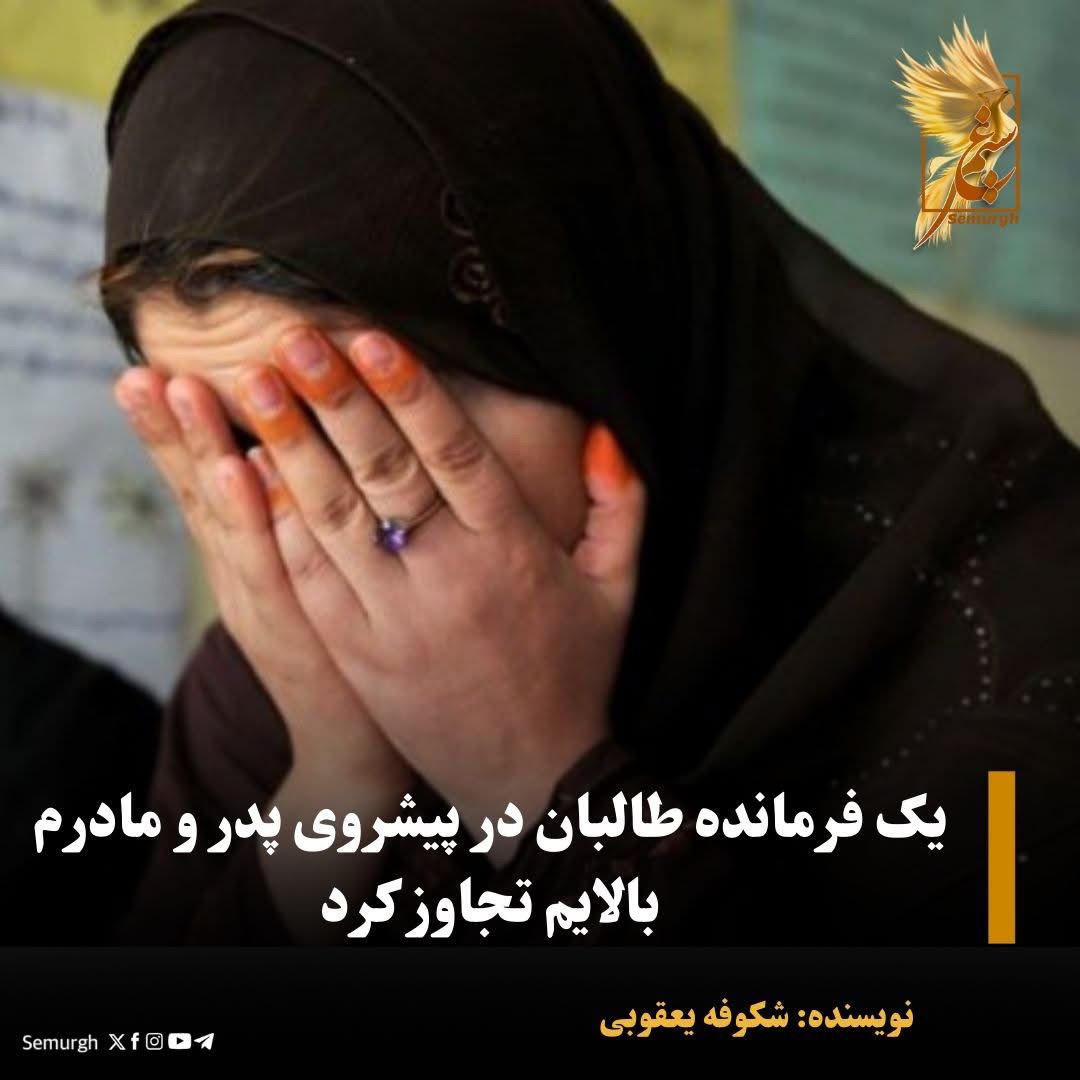

A few months ago, during a conversation with one of my friends from Baghlan, I heard painful words that truly left deep, unspeakable wounds in my heart. She spoke of the endless oppression and brutality committed by the Taliban in this province, particularly in areas where non-Pashtun ethnic groups reside. The suffering that women and girls endure under Taliban control is unimaginable and horrifying. One of the most harrowing accounts was that of a girl who was sexually assaulted in front of her father, and later forcibly married to the same Taliban soldier who raped her. After some time, that soldier divorced her and returned her to her family.
When I heard this story, I was deeply shaken. I decided to contact this survivor, to listen to her pain. After a week, I managed to reach her. On the other end of the line came a voice—not just words, but suppressed sobs, silent fractures, and a deep wound. Her voice trembled as if echoing from the bottom of a pit filled with sorrow. From her first words, I realized she lived in a dark world of pain, solitude, and constant threat—a world where even crying must be hidden to survive. She introduced herself as “Nasrin,” but told me that this was not her real name, used only for her safety and dignity.
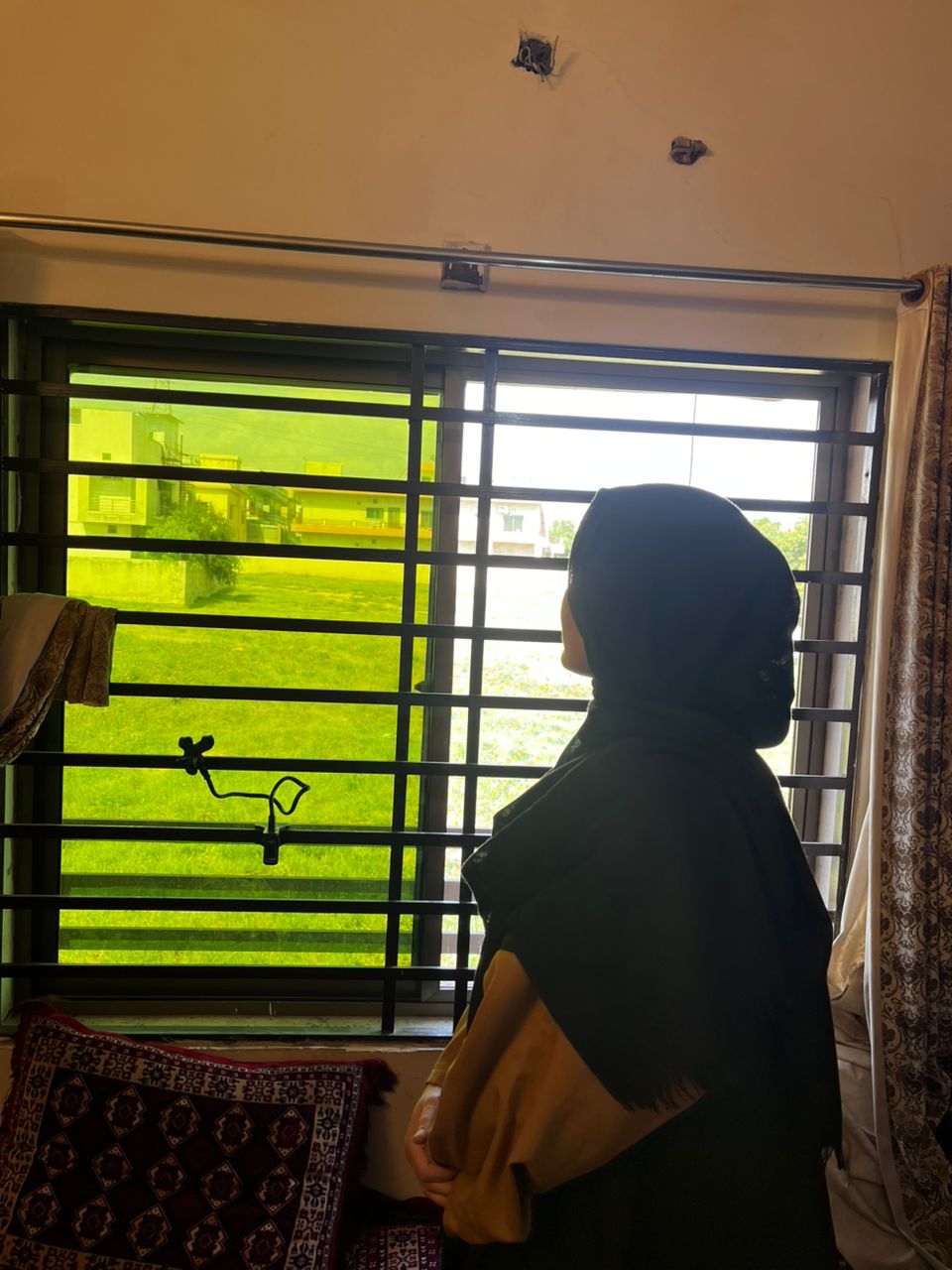
Behind that pseudonym was a girl who had not even finished school but had tasted a bitterness that poisoned her entire life. In her teenage years, she had borne the weight of tragedy that aged her soul. Nasrin came from a rural, illiterate family, but she was a beacon of hope among them—slim, once holding books close, now hiding in fear behind curtains.
With a broken voice, she said:
“I always wanted to become a doctor. I gave my all to studying. I was top of my class until Grade 10. But now… everything is ruined. Everything is gone. All that effort, all those sleepless nights... now all I have left is a pain that has no cure.”
When she said this, it wasn’t just her dream of becoming a doctor that died—it was the voice of an entire generation of Afghan girls suffocated by violence masked as religion.
Nasrin sighed and continued:
“After the Taliban takeover, school doors were closed to me. But I never gave up. I studied at home, even with weak internet and constant blackouts. I tried to keep learning. But then, one night… everything changed.”
Her voice cracked.
“Around 1 a.m., someone knocked on our door. My brother wasn’t home. My father went to open it. Moments later, we heard male voices in the courtyard. My mother and I crept to the window. In the darkness, I saw three armed men, with covered faces, surrounding my father. He stood, but his shoulders trembled.”
Tears welled in Nasrin’s eyes.
“I wanted to scream. I wanted to run to him. But my mother covered my mouth and whispered: ‘If you make a sound, they’ll kill your father.’ So I stayed silent, though my heart was screaming. Minutes later, they left. My father returned, no longer the same. His eyes were full of unsaid things. He sat in silence. I knew then—a single night can change a life forever.”
She continued softly:
“I asked my father what happened. He only said: ‘They were Taliban.’ No anger, no peace—just a dry silence. The next morning, my mother, pale and sleepless, sat beside me and said:
‘Nasrin, they asked your father to give you to them. They said, we want your daughter. But your father refused.’”
At that moment, the world collapsed around her.
“How could anyone—especially in the name of God—ask a father to hand over his daughter?”
Her mother’s eyes begged her not to understand, but Nasrin understood. Her father had fought back silently, had been wounded without shedding blood. The Taliban had threatened to return if they didn’t get what they wanted.
“After that morning, the sun meant nothing to me. Everything became a threat—the sound of footsteps, a knock on the door, even a child’s bicycle bell. I was no longer a daughter in a warm home—I was a prisoner in a collapsing fortress. And my father… his silence screamed every day that he was in pain but would never surrender.”
Nasrin went on:
“My mother stayed with me every night. She brushed my hair, whispered prayers. Her eyes filled with tears, but her lips forced a smile. Our home was no longer a home—it was a bunker. I waited inside, fearing another threat, an attack, or just the constant fear itself.”
Then came the night of horror.
“A week later, the Taliban returned. This time, my father told my mother to hide me. She took me to a dark storage room filled with broken things and shadows that reeked of fear. I hid behind an old trunk. My heart pounded. Then I heard a loud crash—the door had been kicked in. My mother screamed: ‘Don’t hurt my husband! Please, for God’s sake!’”
Nasrin opened the door a crack.
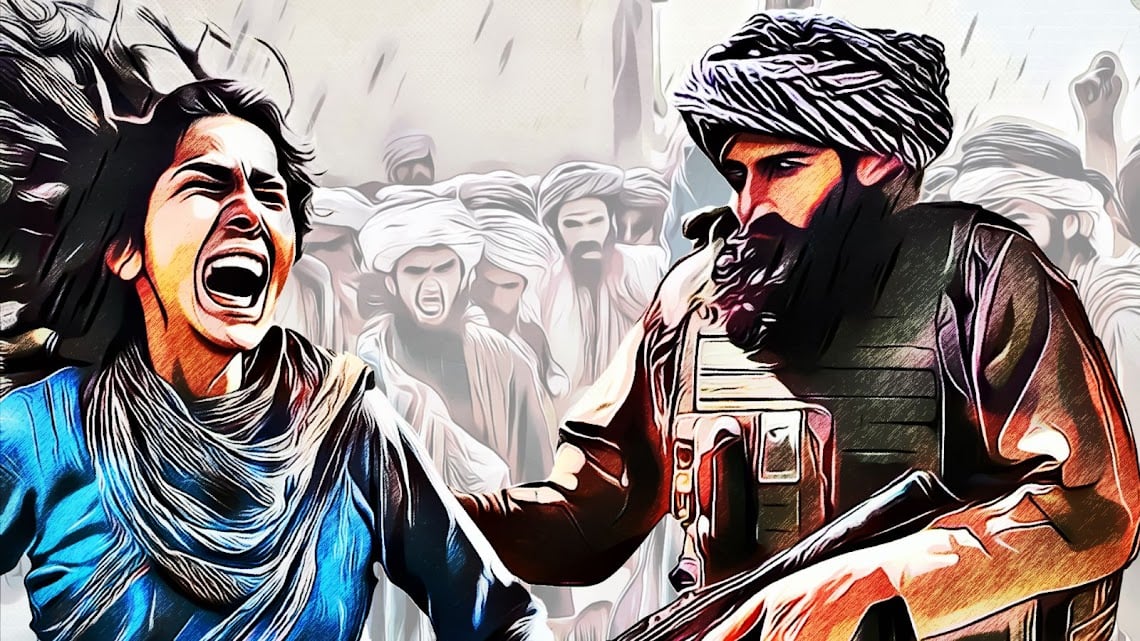
“I saw my father on the ground, blood on his lips, while three Taliban beat him mercilessly. One of them, with long hair and dead eyes, shouted: ‘There she is!’ They grabbed my parents like spectators to a slaughter. That commander came toward me. He smelled of gunpowder and evil. I was frozen. I didn’t cry. I didn’t scream. I just watched. And in front of my parents, he raped me.”
“I heard my father scream from his soul. My mother fainted. And when it was over, the man whispered in my ear:
‘If you say a word, I’ll kill you all.’”
Nasrin’s voice broke as she continued:
“Days later, they came again. This time, they forced me into a marriage with one of their soldiers from Kunduz. I didn’t care where he was from. What mattered was that I was being thrown deeper into a nightmare I had no escape from. At his house, his mother beat me, cursed me for marrying her son who already had a fiancée. I couldn’t speak. My body trembled. My tongue was locked. The beatings drowned out every question: Why me? Why this torture?”
Written by: Shagofa Yaqubi