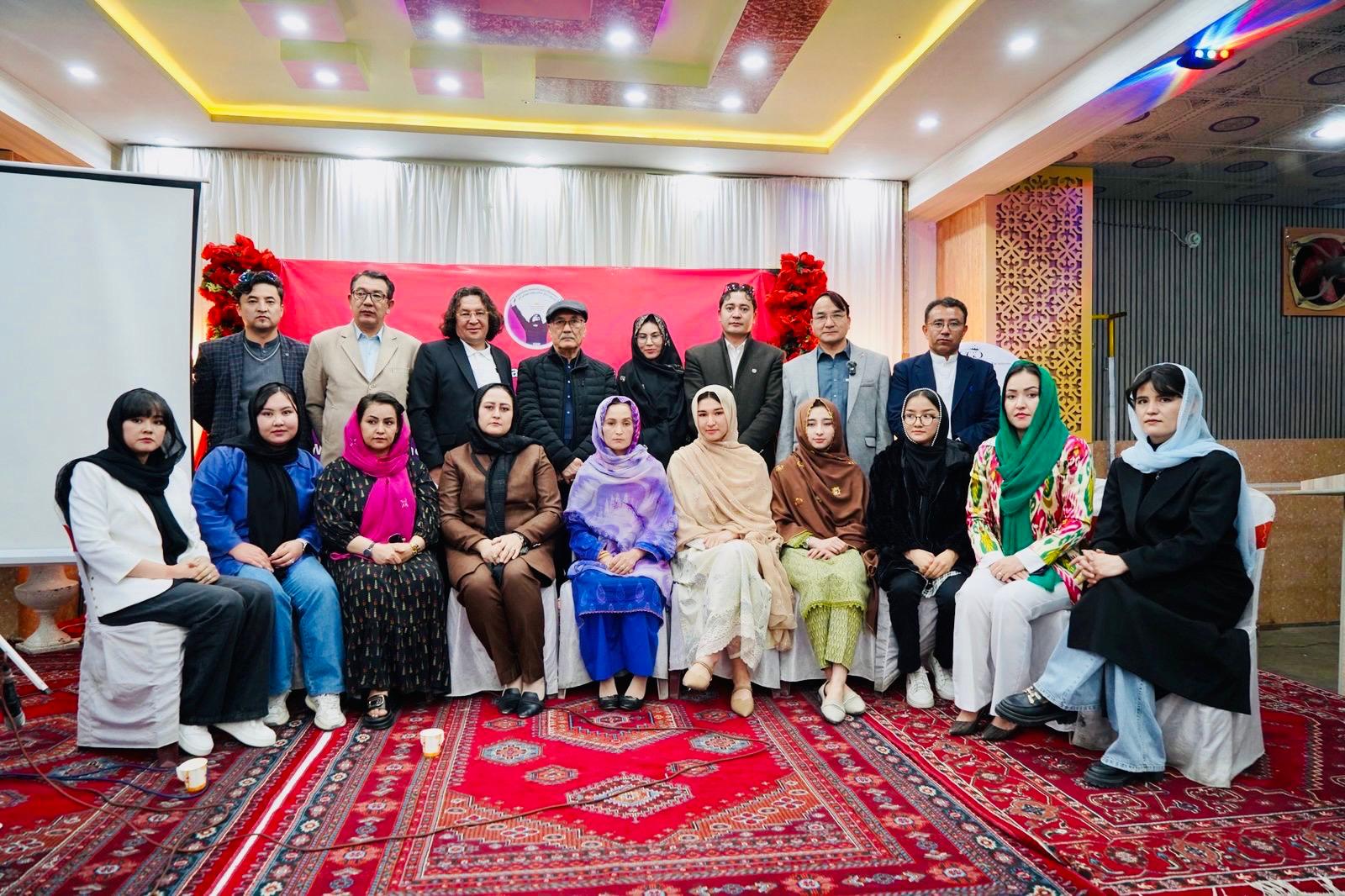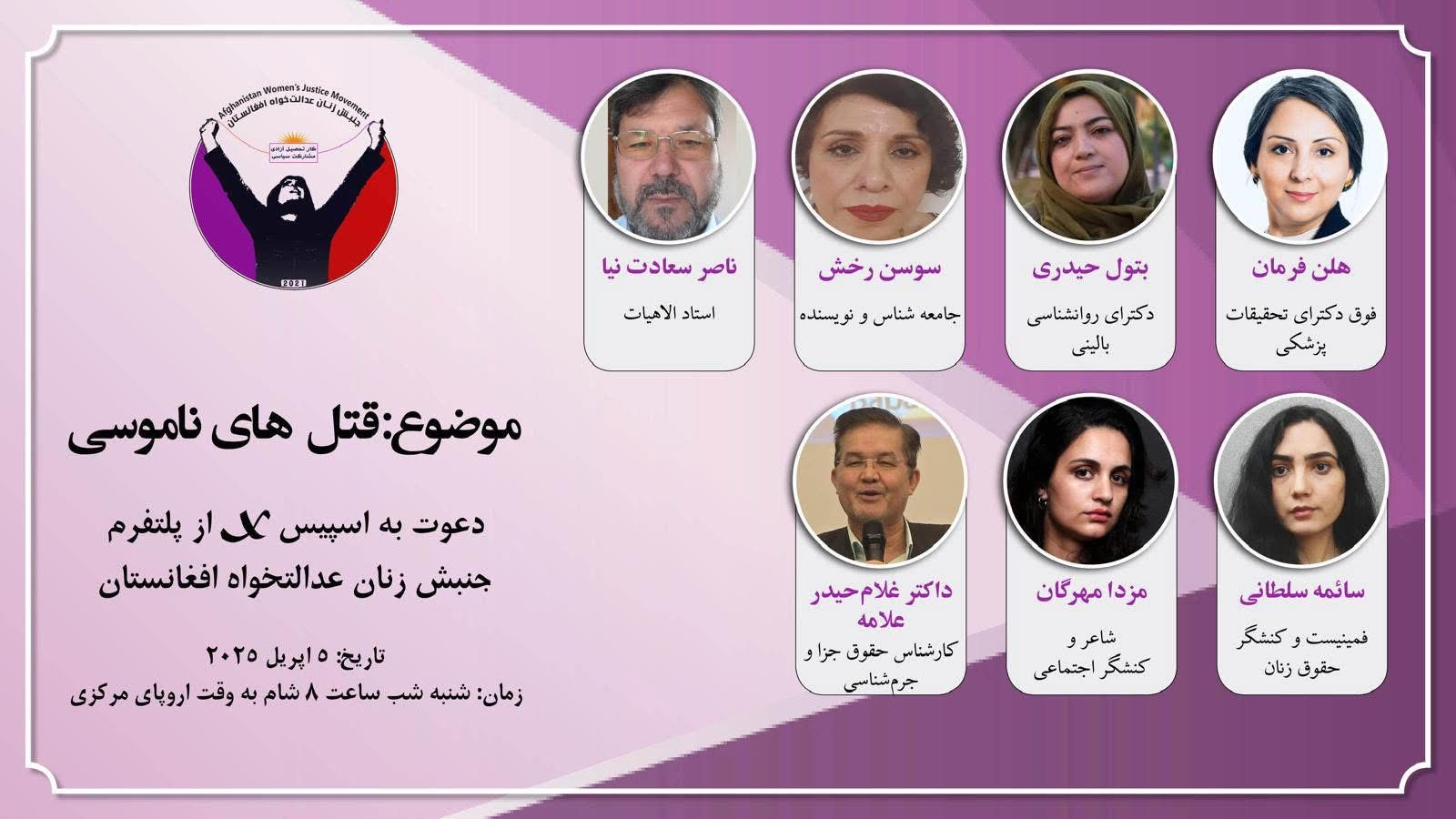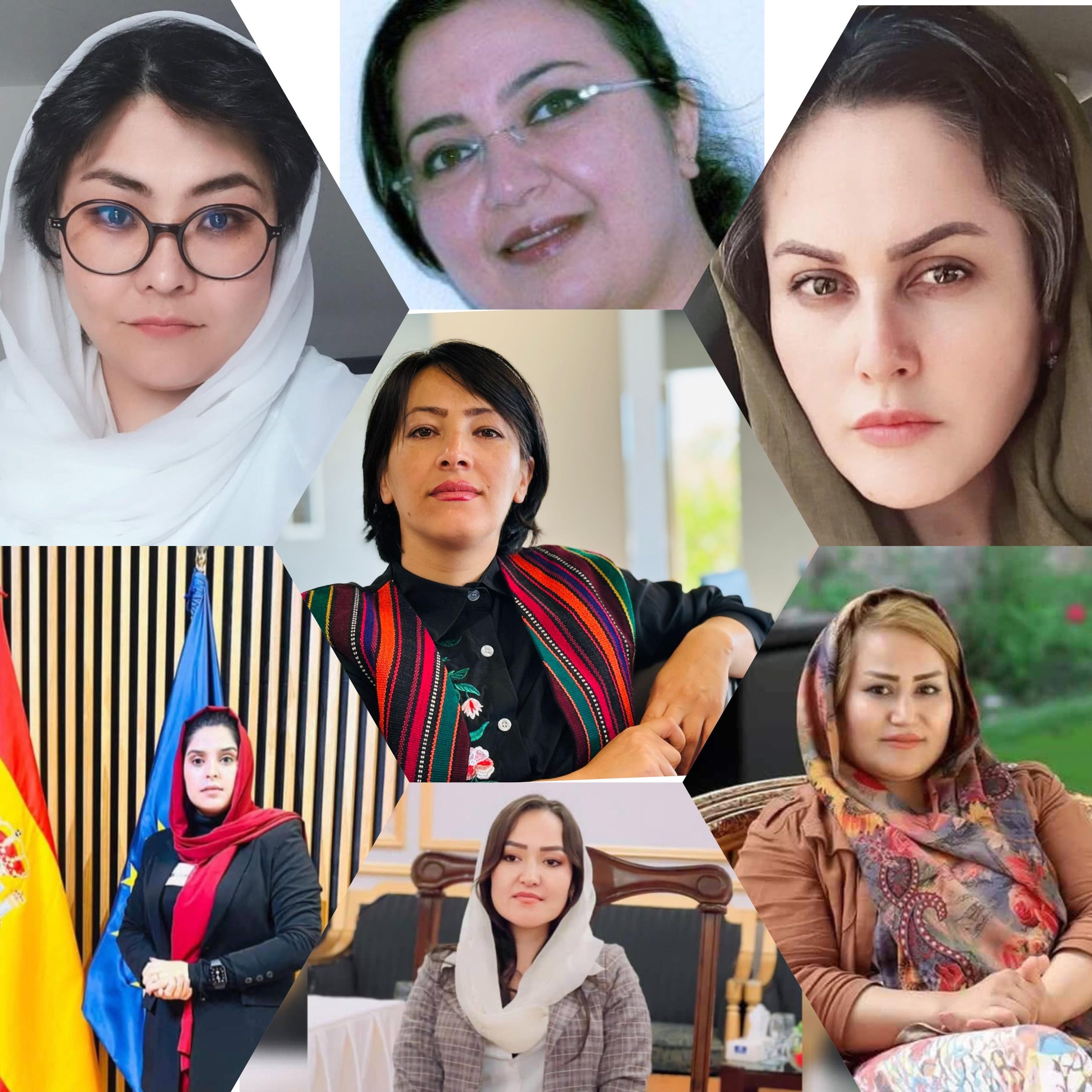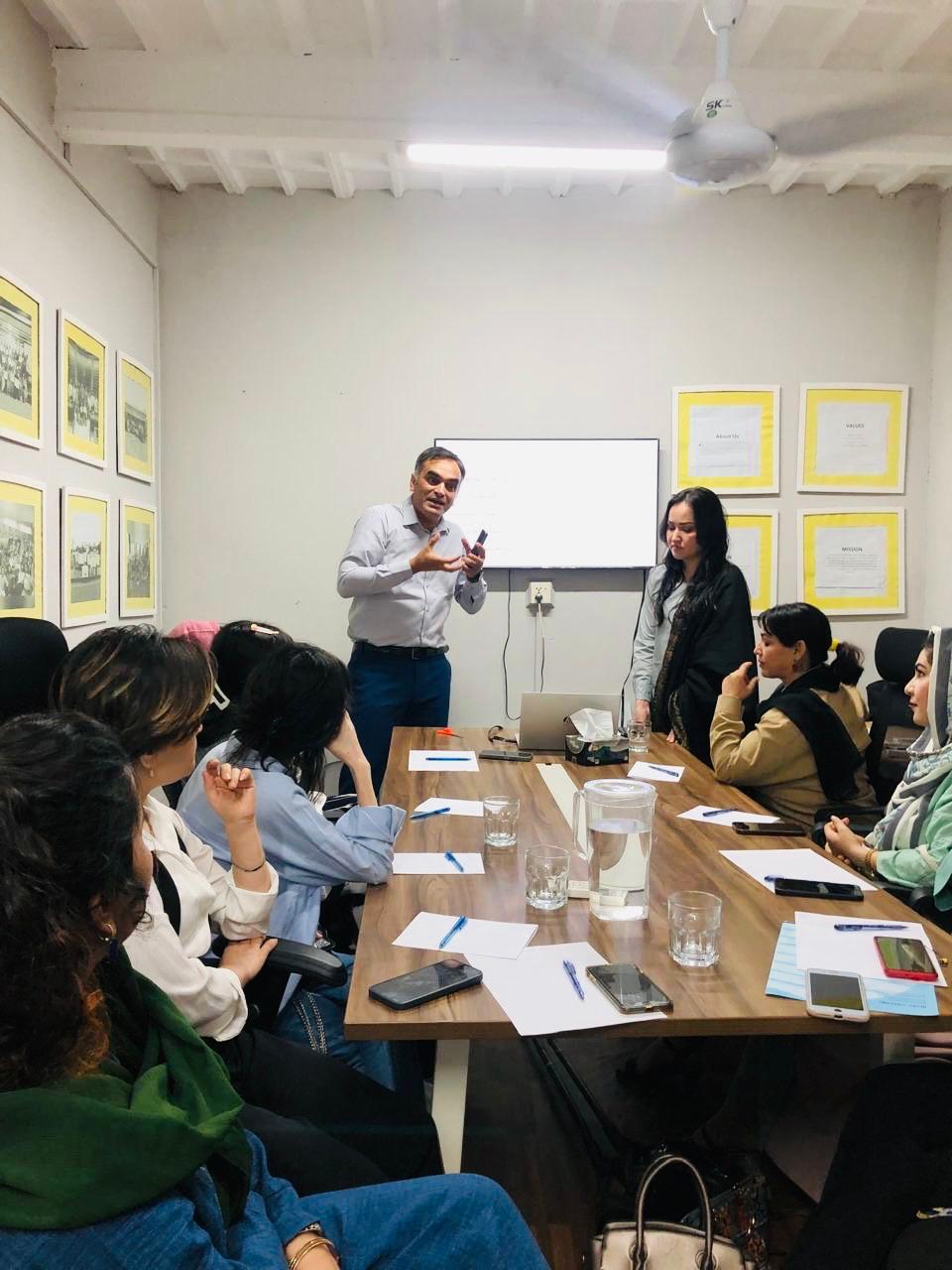
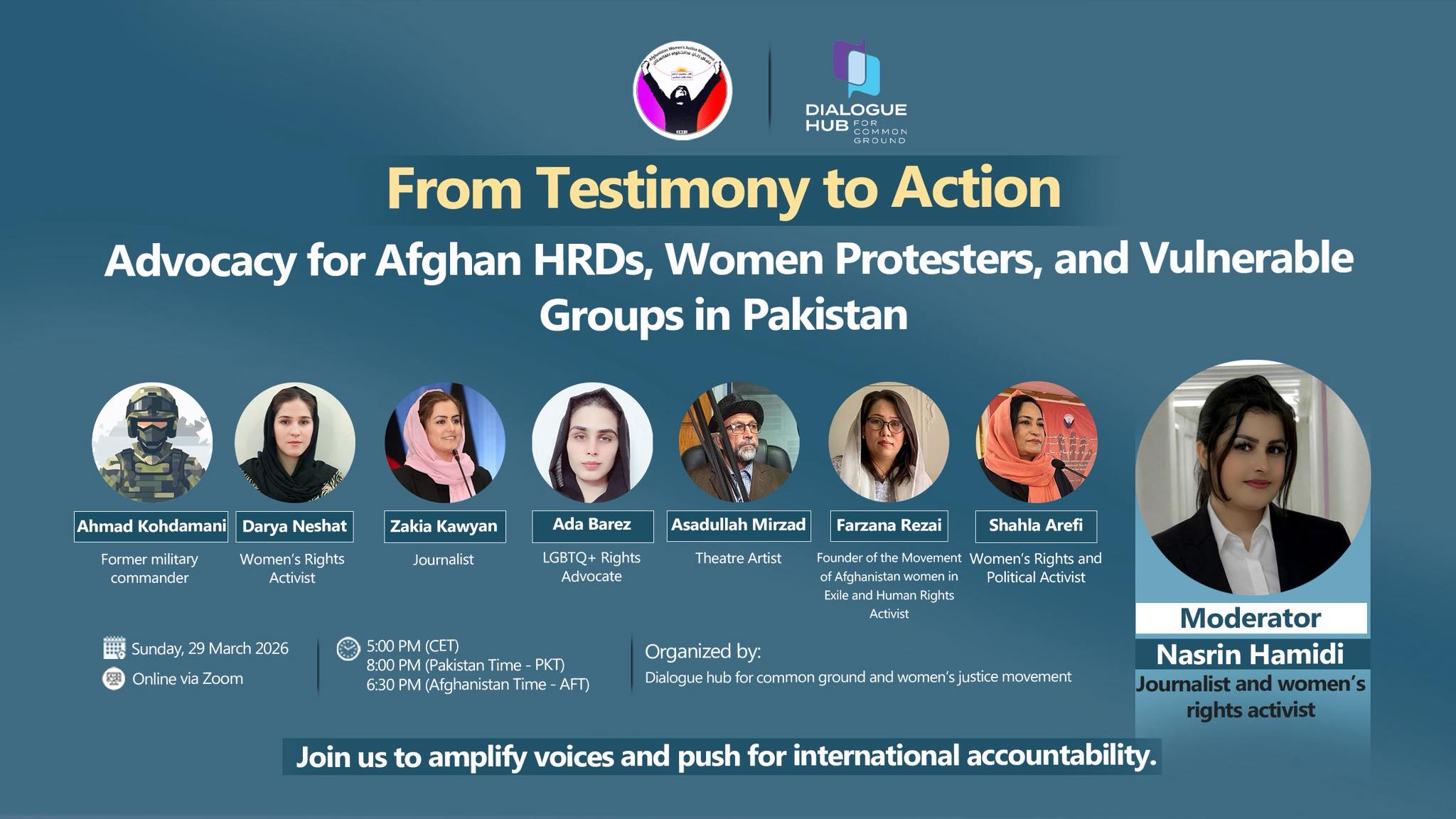
We are pleased to invite you to an important online discussion featuring Afghan human rights defenders, journalists, and women’s rights activists.
This event will highlight the situation of Afghan HRDs, women protesters, and vulnerable groups in Pakistan, while exploring pathways for advocacy and international accountability.
Sunday, 29 March 2026
6:30 PM Afghanistan Time
Online via Zoom
Featuring distinguished speakers and moderated by Nasrin Hamidi, journalist and women’s rights activist.
Join us to amplify voices and push for meaningful international action.
Register
https://docs.google.com/.../1FAIpQLSfNy1t98bXaQ1.../viewform
#AfghanWomen #HumanRights #StandWithAfghanistan #Advocacy #WomenProtesters
Website us : wj-movement.org
Shahla Arefi highlights a crucial distinction among Afghan displaced communities:
The first group includes those who moved to Pakistan for work and livelihood, many of whom have lived there for 30 to 40 years. In some regions, the shared use of Pashto and cultural similarities made relocation possible for many Afghan families. When they are forcibly returned, they face severe challenges such as lack of shelter, food, and financial support.
The second group, however, faces a far more urgent and life-threatening reality:
human rights defenders, former members of the national army and intelligence services, journalists, protesters, and civil society activists.
For them, the issue is not only survival in terms of food and housing, but immediate personal security.
If they are not relocated to safe countries in time, or if they are deported back to Afghanistan, they may face persecution, imprisonment, or even lose their lives.
The world must recognize this difference.
Silence and inaction can cost human lives.
After the return of the Taliban to power, thousands of former Afghan soldiers and military personnel were forced to flee the country and seek refuge in Pakistan. In this video, Mr. Kohdamani, one of the former military officers from the past two decades, speaks about the severe challenges and hardships faced by ex-service members in exile.
He shares the painful reality of losing many of his former comrades, who have been killed by the Taliban over the past four years, and highlights that no institution has provided meaningful support or protection for former military personnel. Only a small number have managed to seek asylum in safe countries, while many others continue to live under serious security threats and extreme economic hardship.
He calls on human rights organizations and relevant institutions to urgently advocate for the rights, protection, and safe resettlement of former Afghan military personnel, especially in these deeply difficult living conditions.
Ms. Darya Neshat speaks out about the ongoing struggles and challenges faced by protesting women in Pakistan and the continued neglect by the relevant institutions.
She further adds that countries around the world and the international community appear to be focused on their own political interests,while Afghan women have been left alone in one of the most difficult chapters of their history.
Their voices,demands,and sacrifices must not be ignored.
The silence of the world in the face of injustice and oppression only deepens the suffering.
Afghan women deserve solidarity, protection,and action,not abandonment.
Journalists displaced in Pakistan are facing an alarming humanitarian and professional crisis.
As highlighted by Mirwais Khawarin, many Afghan journalists are living in extremely difficult conditions, with some lacking even basic shelter and a safe place to stay. They continue to face detention, deportation, and complete uncertainty while waiting for their asylum cases to be processed, a process that often takes an unbearably long time.
This prolonged uncertainty is not only a serious security risk but also an immense economic and psychological burden.
Afghan journalists are trapped between two forms of oppression: inside Afghanistan, they endure censorship, threats, and harassment under Taliban rule; in Pakistan, they face pressure, intimidation, and mistreatment by police and state authorities.
The international community and relevant organizations must urgently pay attention to their situation and provide meaningful protection and support.
Journalism is not a crime. Those who risk their lives to tell the truth deserve safety, dignity, and justice.
The voices of Afghanistan’s artists must be heard.
Mr. Mirzad, an artist who has devoted nearly his entire life to Afghan cinema and theater, speaks about the heartbreaking condition of artists under Taliban rule and in forced displacement. He is currently living in Pakistan under extremely difficult economic conditions, with an uncertain future.
According to him, many artists cannot even afford medical treatment or medicine and are living in severe hardship. On one hand, there are no work opportunities available for them in Pakistan, and on the other, their future remains uncertain.
This is part of his remarks during a webinar organized by Dialogue Hub and the Women’s Justice Movement.
Art cannot be silenced, but artists must not be left in silence and forgotten.
Share: