
✍️ By: Hamia Naderi
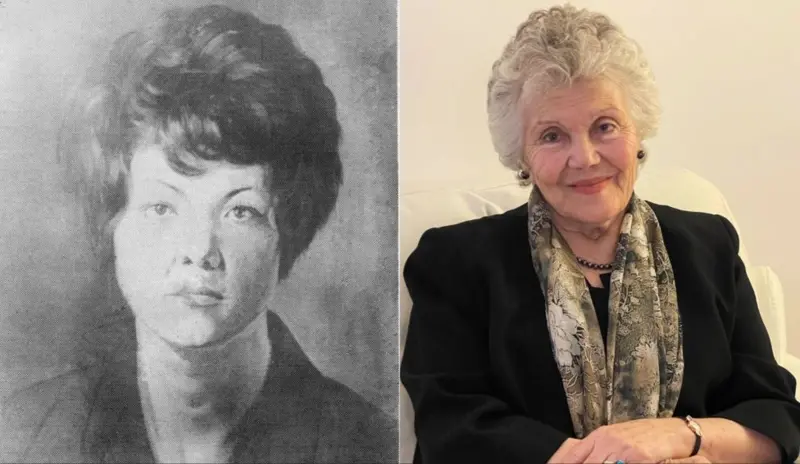
Habiba Askar is one of Afghanistan’s bold artistic pioneers — a woman who, in 1957, at a time when women’s presence on stage was still taboo, appeared unveiled before an audience and paved the way for female performers. Now 80 years old and living in Australia, her vibrant legacy in theater and cinema remains inspiring.
From the late 1950s through the end of the 1980s, Askar performed in more than 400 stage and radio plays. Her voice was familiar to radio listeners, and she also appeared in the feature film “The Creditor”.
She performed in renowned venues such as Kabul Nandari, Zainab Nandari, Shari Nandari, and Afghan Nandari, playing roles in works by playwrights including Molière, Shakespeare, Gorky, Chekhov, Brecht, Tennessee Williams, as well as Afghan writers like Rashid Latifi and Abdul Qayum Besed.
Askar entered theater as a teenager at Neswan Girls’ School and quickly rose to become one of Kabul’s leading actresses. Her acting followed the Stanislavski method — immersing herself in the character, living their inner life, and creating authenticity on stage.
In 1961 she was named Afghanistan’s Best Actress of the Year. Her performances in “Under the Elms”, “Mother” (by Gorky), and “Nervous Women” won wide acclaim. She often performed alongside prominent artists like Abdul Rahim Sarban, Rafiq Sadeq, and Khurshid Payah.
She recalls: “In those years, the theater was full of families. After every performance, the audience would stand and applaud. We were like a family ourselves.”
Askar credits the breaking of taboos around women in theater to the girls of Neswan School, cultural families, and women like Zainab Siraj, who founded Afghanistan’s first women’s theater and cinema hall (Zainab Nandari) in 1947.
She says: “Some of my female colleagues had a hard path to the stage, but they succeeded. My father supported me when he saw wise people working in the theater.”
She fondly recalls the long-running play “Mother”, which ran for three months with tickets sold out weekly. She also speaks of collaborating with Sarban in that play: “He had an extraordinary ability to embody roles, an unmatched voice among male actors, and an exceptional memory for his lines.”
Her love for theater endures: “Theater is the art of living in the moment. It leaves no room for retakes. The actor connects directly with the audience, creating a powerful bond that cinema cannot replicate.”
Despite her unmatched role in Afghan cultural history, Askar laments that in the past two decades she has received no invitations to perform on stage or in film.
In a message to Afghan women, she says: “Do not silence your voice. Women’s solidarity creates a stronger voice. Men must also stand with women, not letting their daughters remain uneducated or see their rights trampled.”
Habiba Askar — a voice that still shines against the darkness, for art and freedom.